
Ocean World Coloring Pages
Dive into an ocean world filled with whales, dolphins, sharks, reef fish and more. Pick an underwater friend and bring the sea to life with color.

🌊 Pick an Ocean Picture to Color
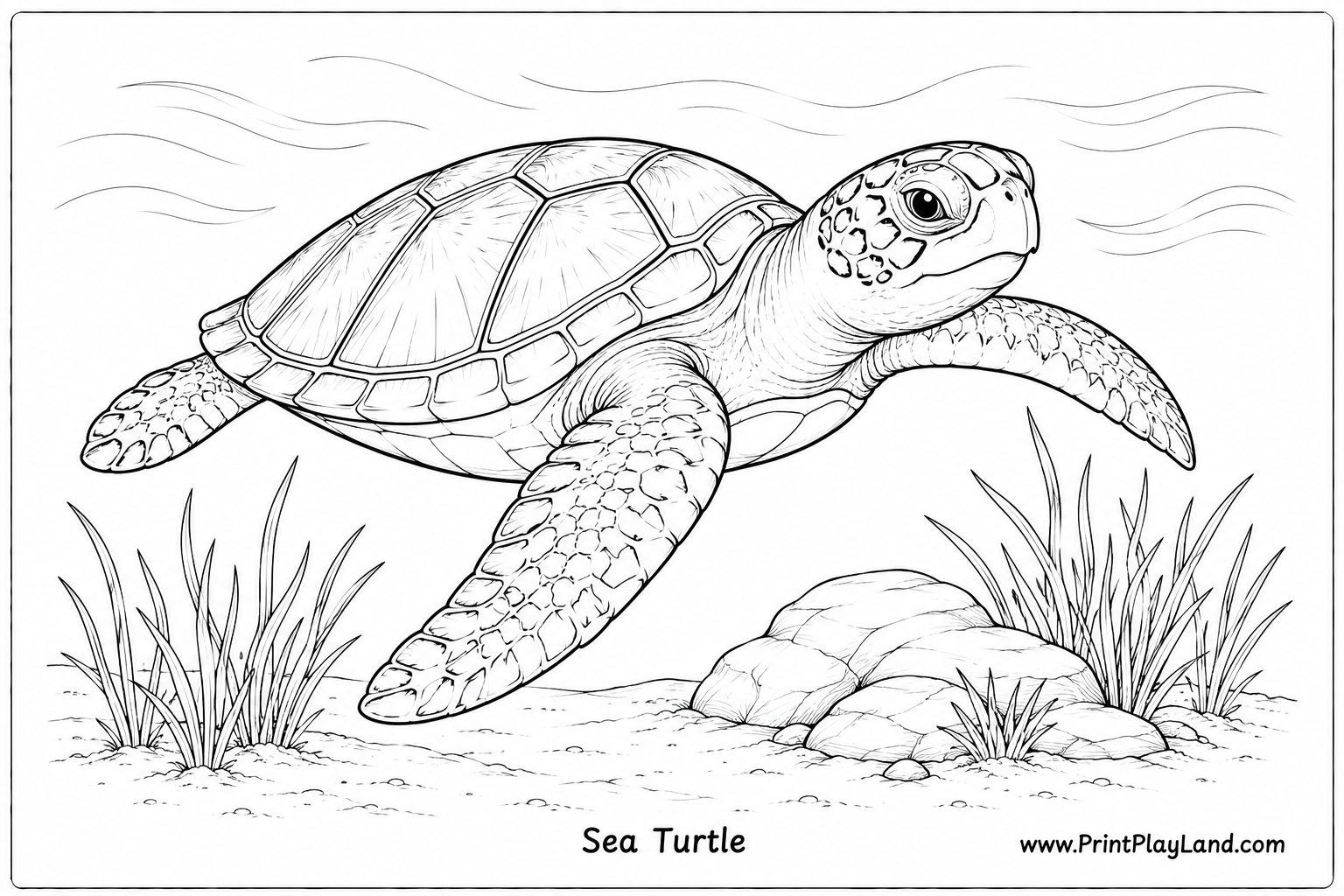
Choose a sea turtle, playful dolphins, a giant whale, reef friends or another ocean scene and fill the underwater world with your favorite colors.
🐋 Explore Ocean Habitats
The ocean has many different places to live, from bright surface waters to reefs, tide pools and deep drop-offs.
☀️ Near the Ocean Surface
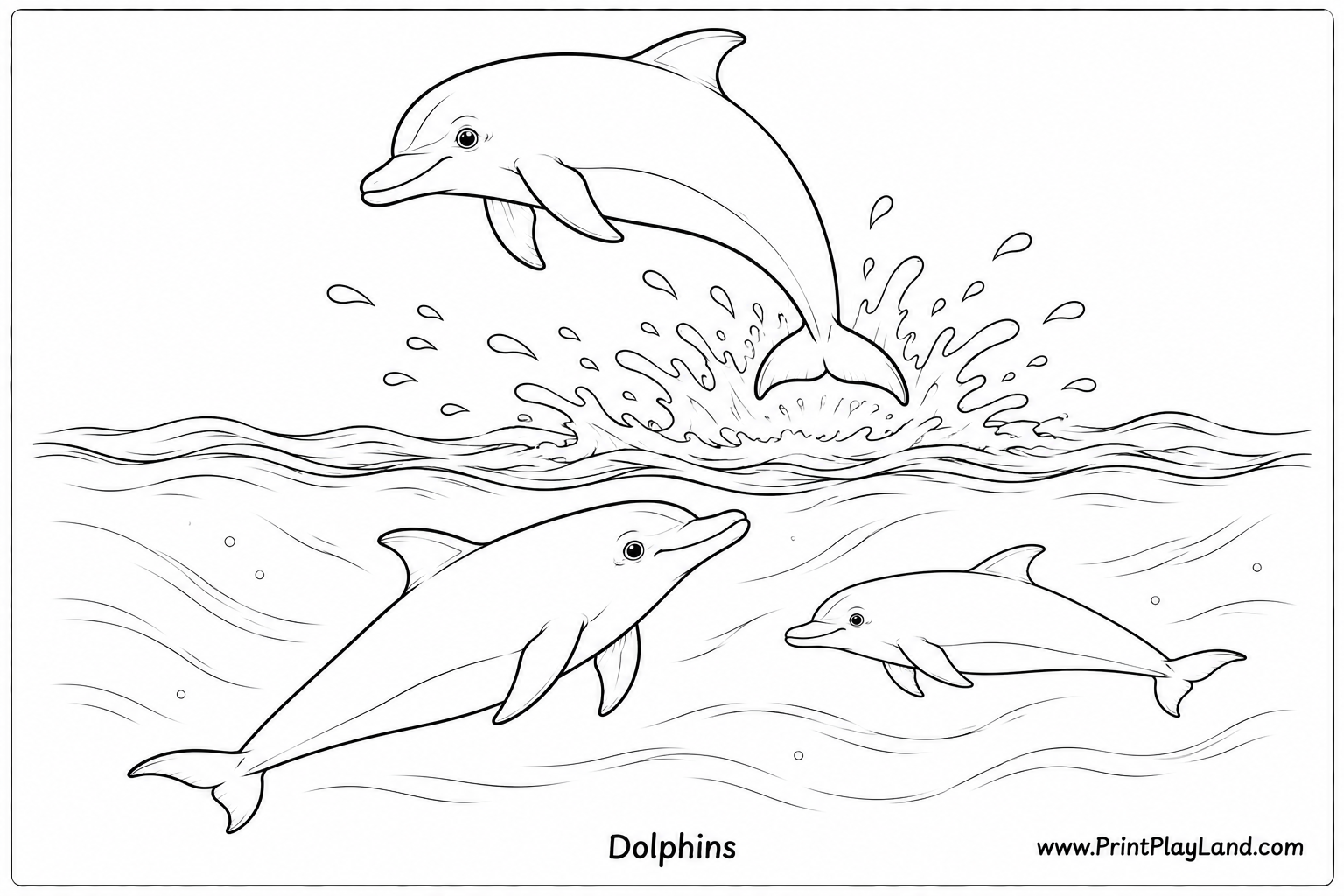
Dolphins swim through surface waters and sometimes leap above the sea. Whales also rise to the surface to breathe.
🪸 Life Around Coral Reefs
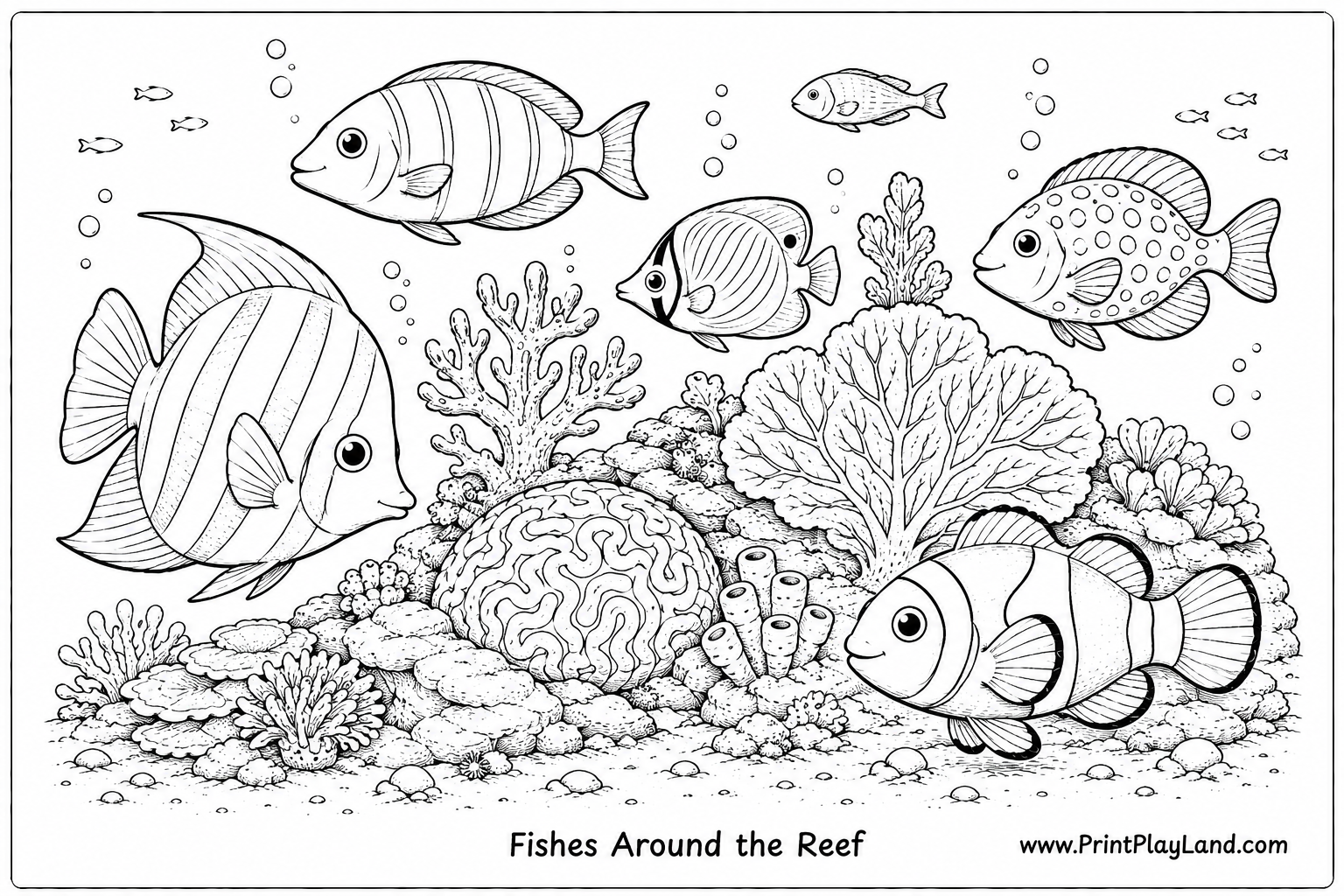
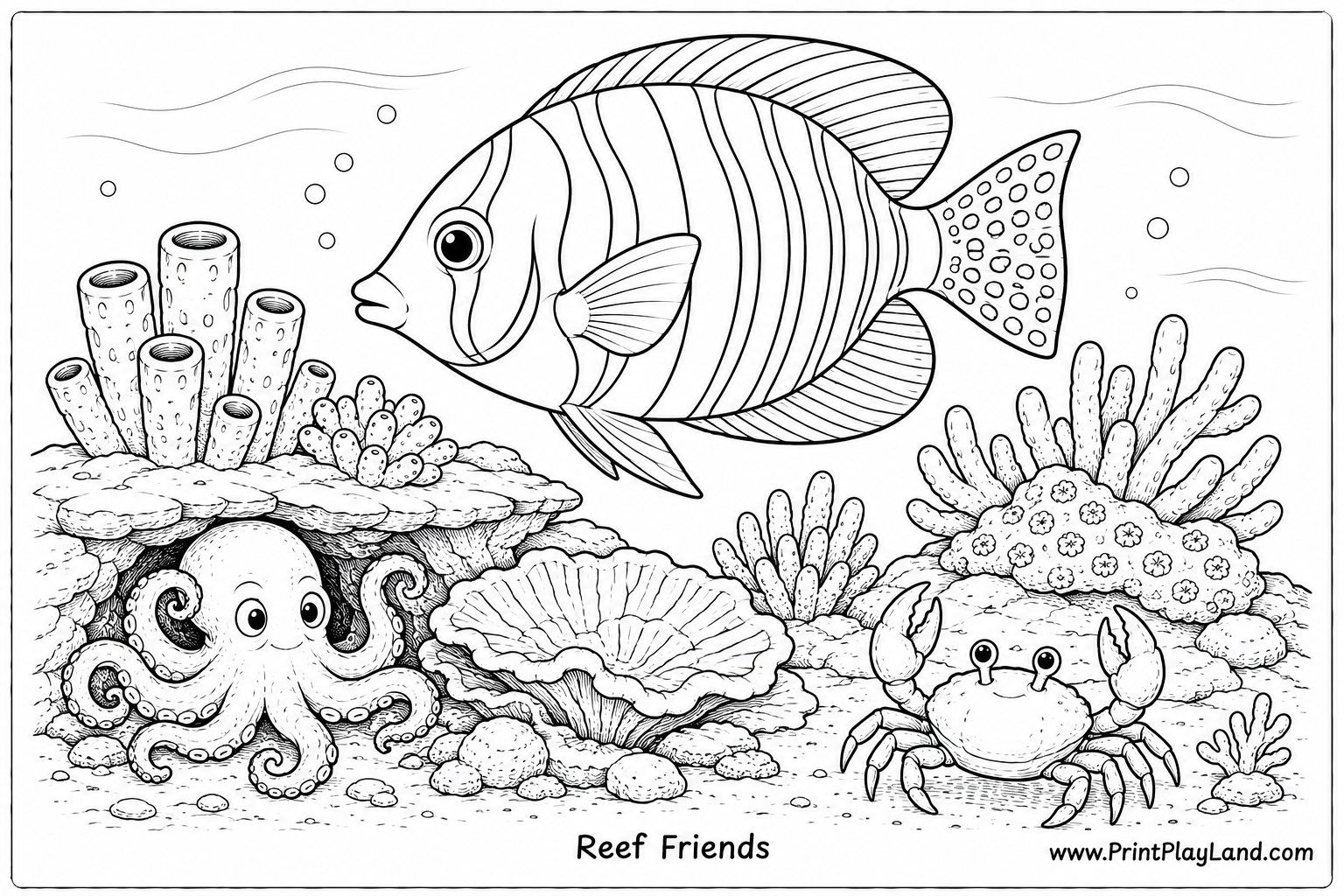
Reef fish, clownfish, octopuses and many other animals find food and shelter around colorful, complex reef habitats.
🏖️ Shallow Water and Sandy Banks
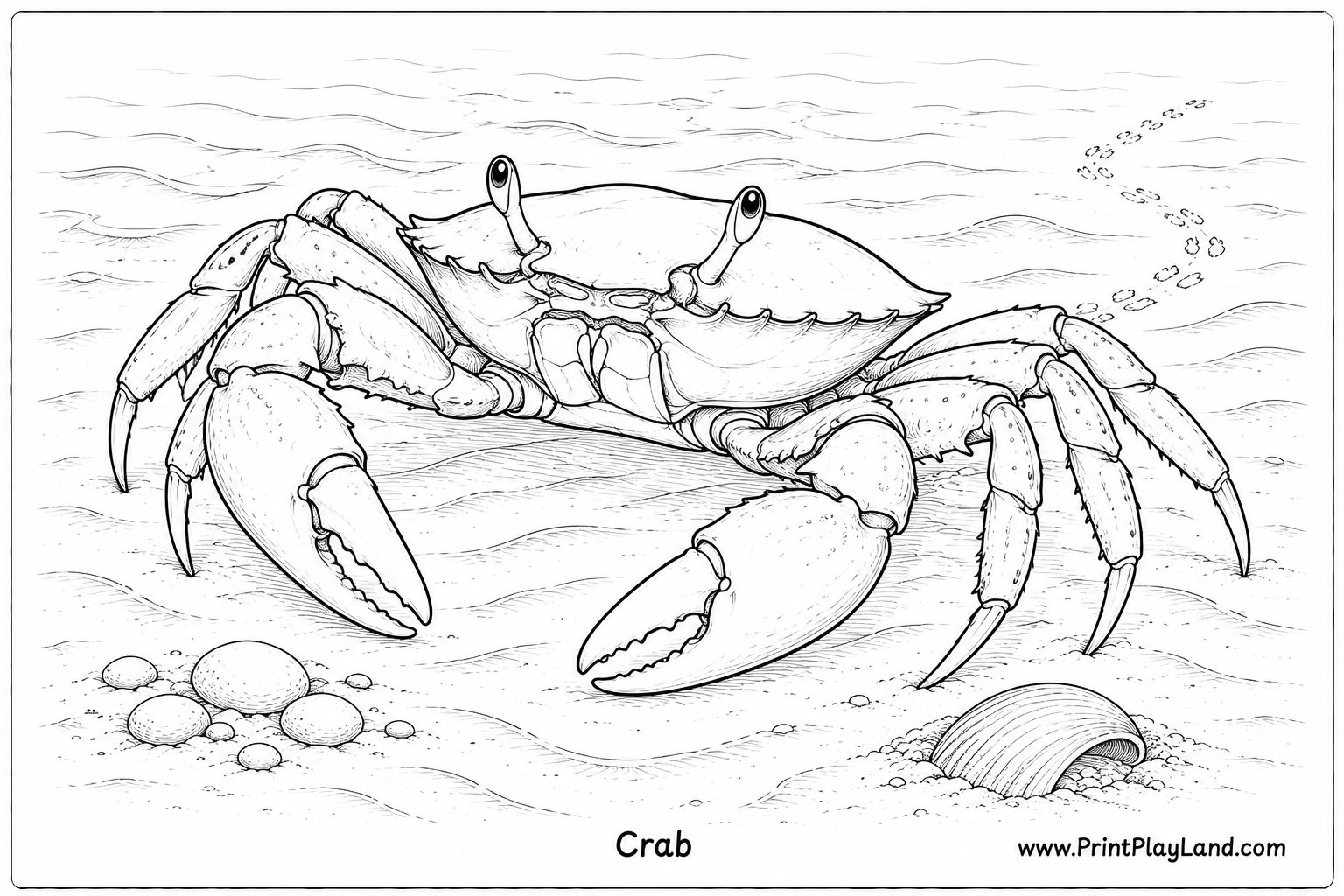
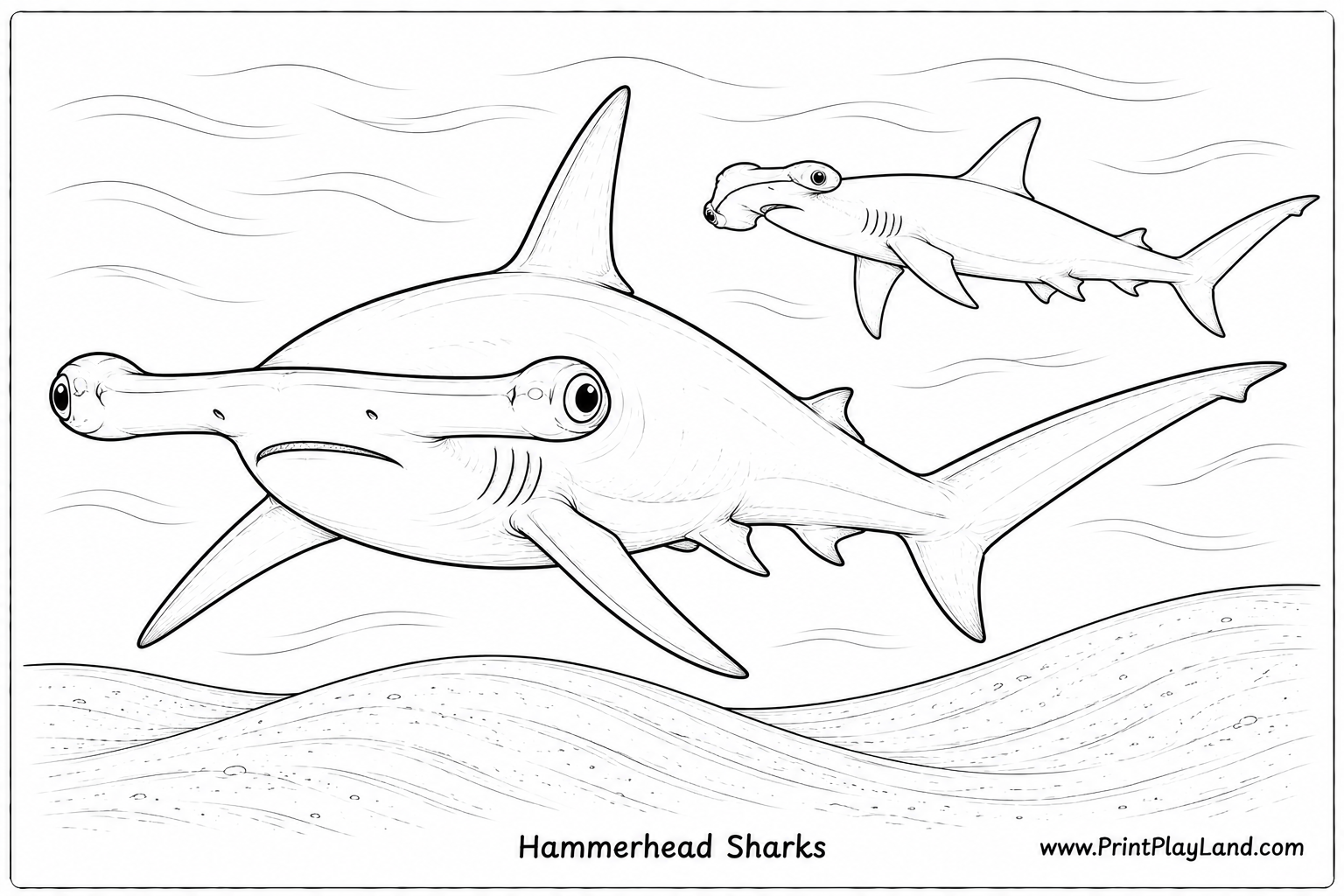
Crabs can move across sandy shallows, while some sharks swim above underwater sand banks and coastal channels.
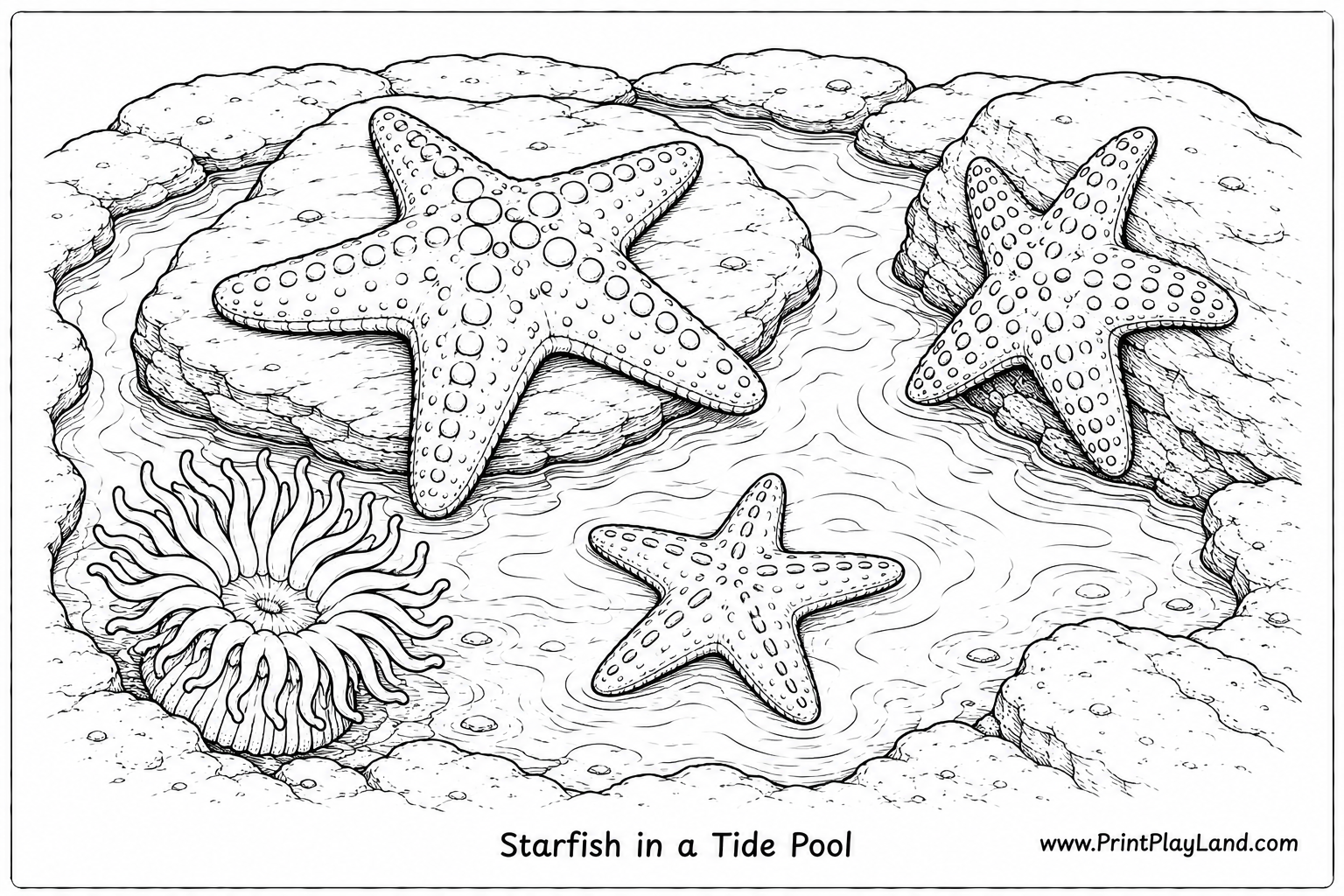
🪨 Rocky Tide Pools
Tide pools can form among coastal rocks. Sea stars, anemones and other small sea animals may live in these shallow pools.
🌊 Drifting Through Open Water
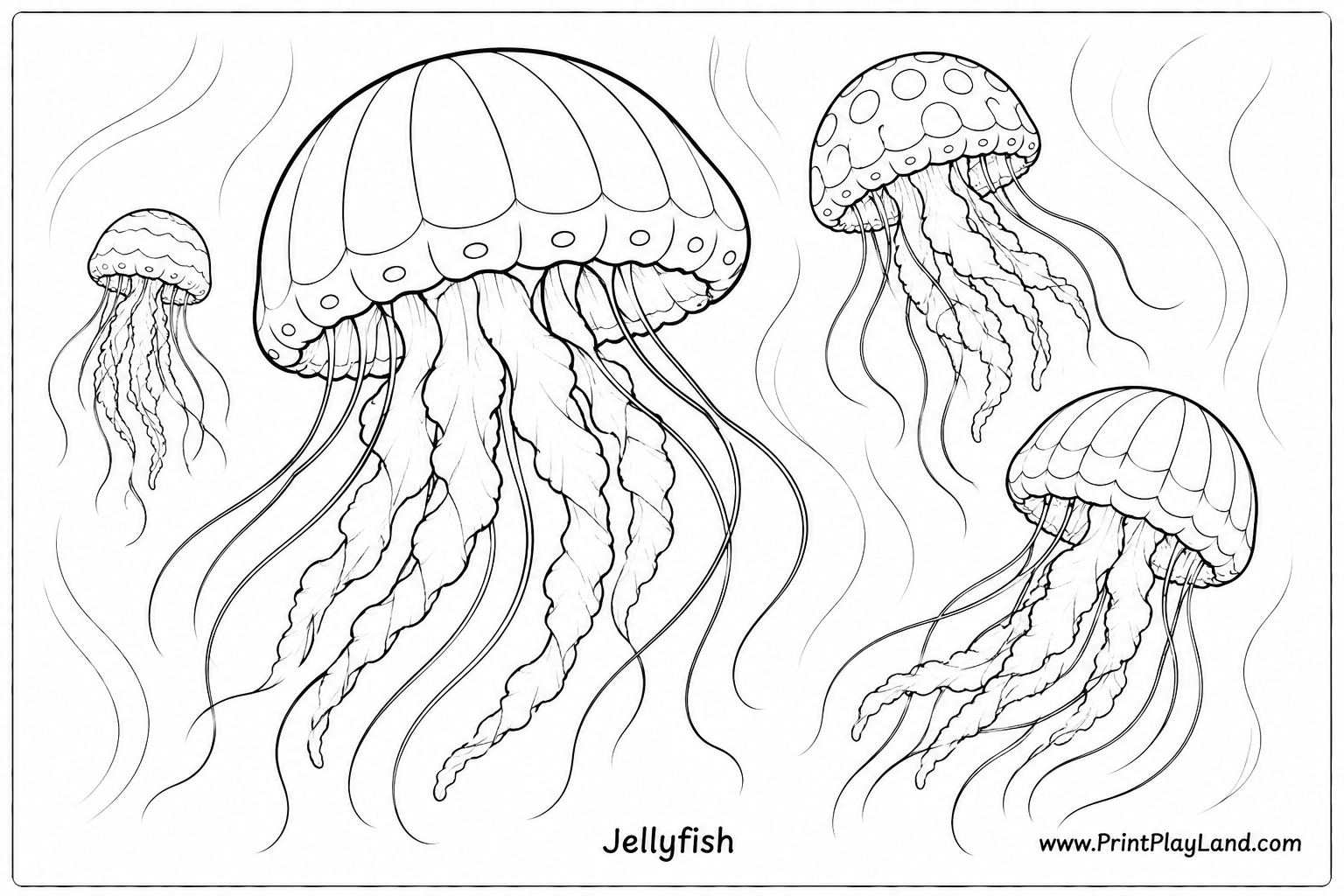
Jellyfish drift through ocean water with currents. Their soft bells and trailing arms create very different shapes to color.
🌌 Deep Water and Drop-Offs
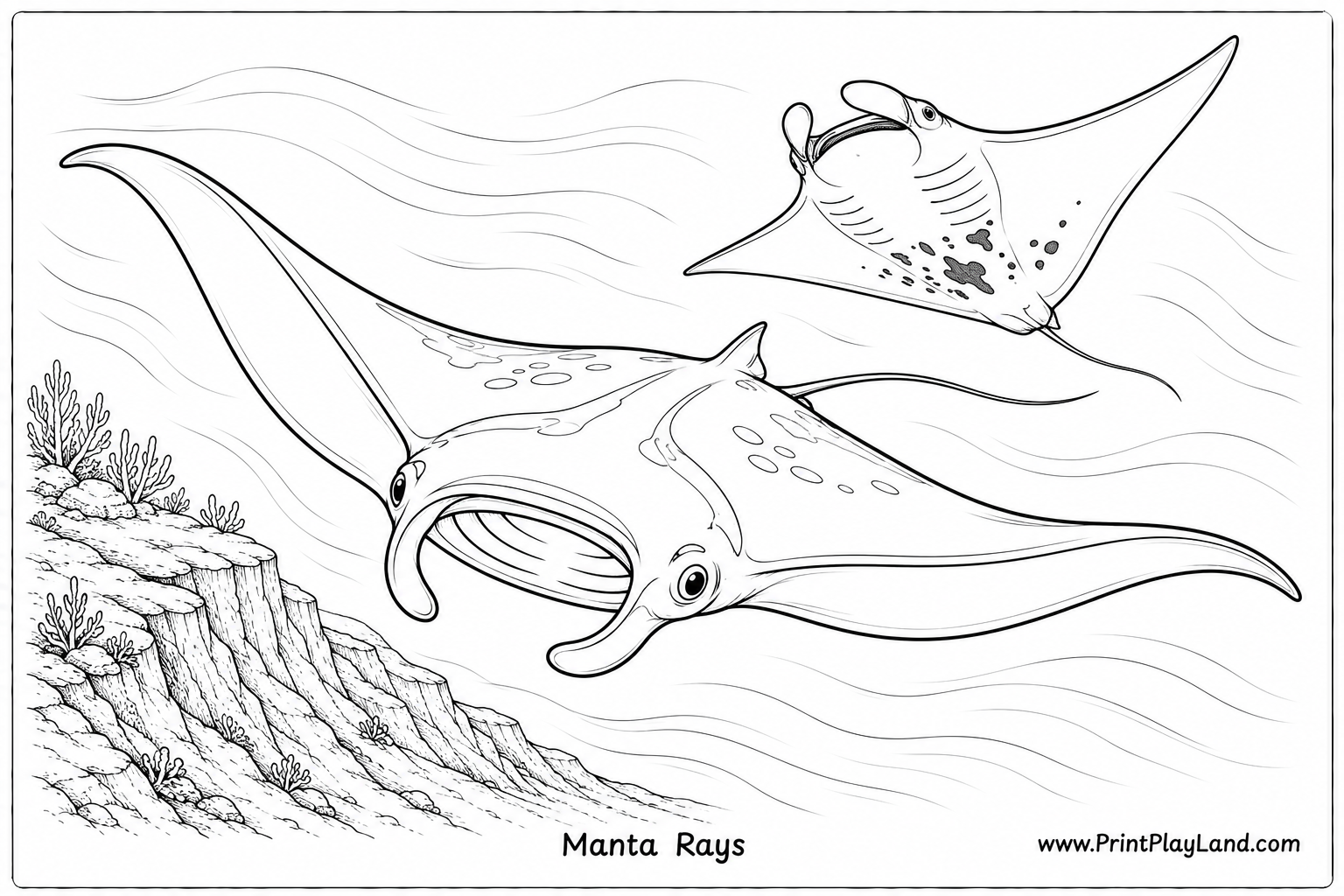
Underwater ledges can descend into deeper water. Manta rays glide through open ocean above these dramatic underwater spaces.
🌊 Explore an Ocean World
Look above, below and around the water. Ocean animals move, rest and find shelter in many different ways.
Life Near the Surface
Dolphins are mammals and need to breathe air. They regularly return to the ocean surface and can sometimes leap completely above the water.
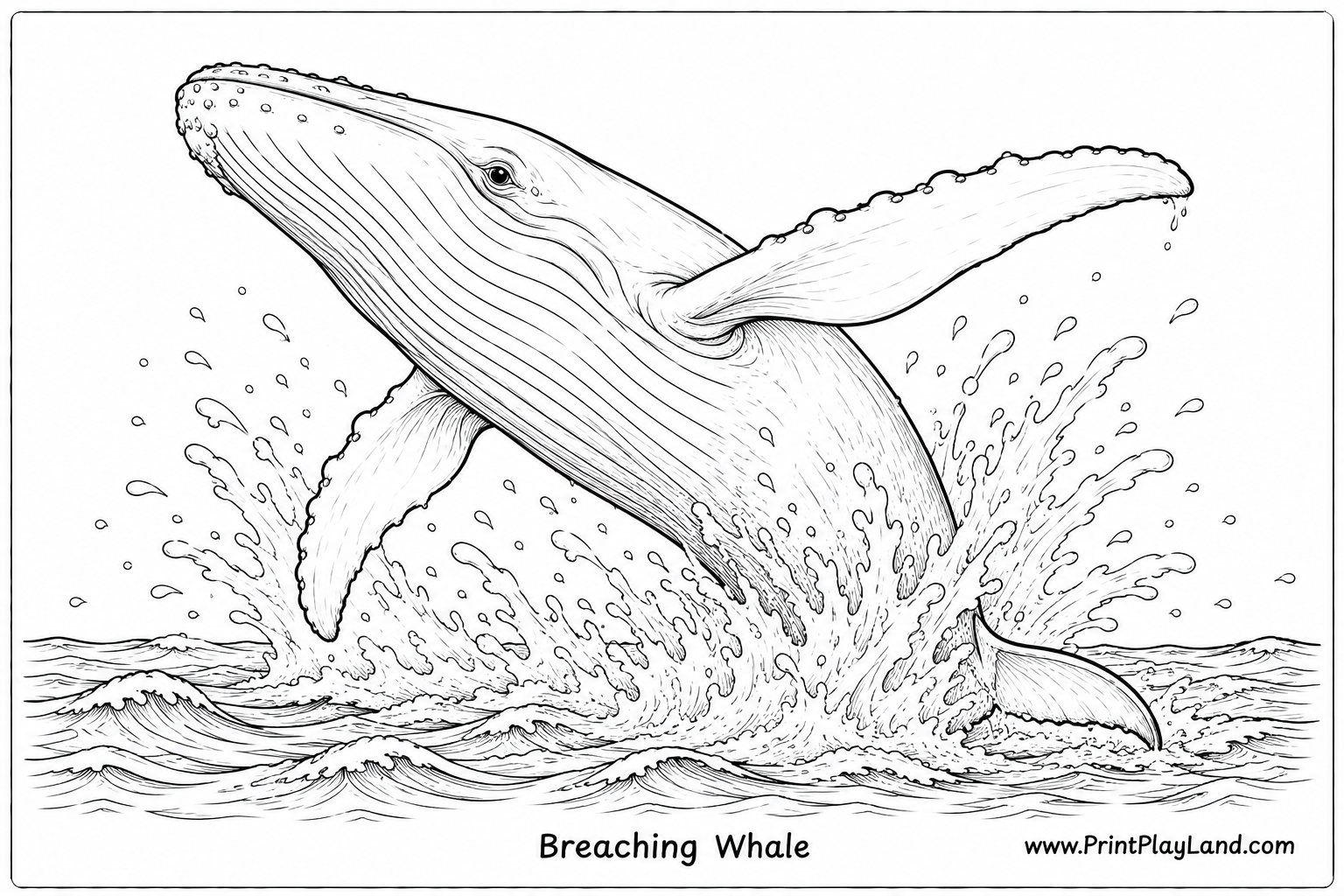
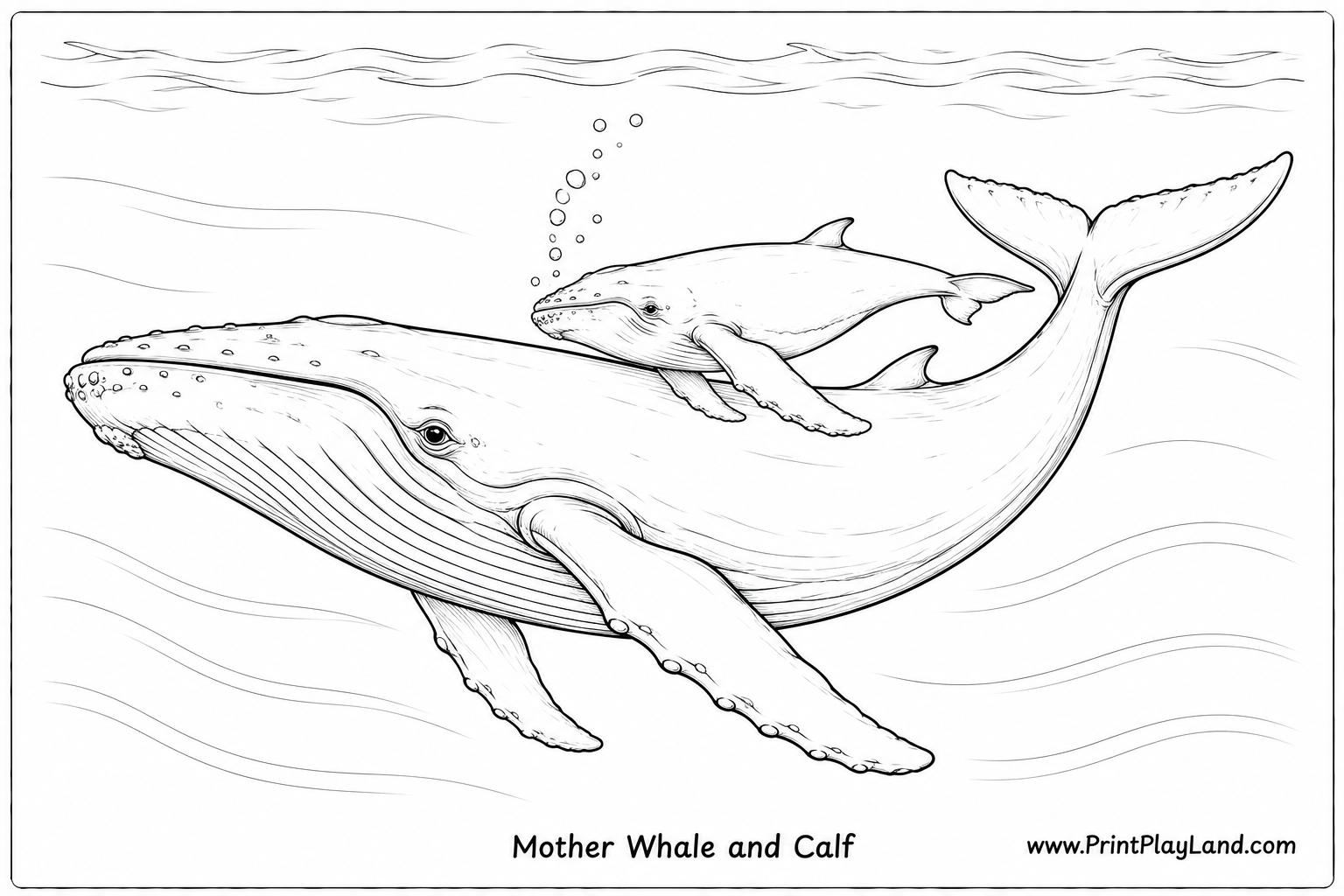
Whales are mammals too. A humpback whale may lift much of its enormous body out of the sea in a movement called breaching, creating a powerful splash when it returns to the water.
A Whale Calf Stays Close
A young humpback whale is called a calf. Calves stay close to their mothers while they are young and depend on their mothers for milk.
In the mother whale and calf coloring page, the smaller calf swims very close beside its much larger mother. Their different sizes make the family pair easy to recognize.
Busy Life Around a Reef
Coral reefs create complex underwater habitats with ledges, openings and many different shapes. Fish can swim above, around and between reef structures.
Corals can have very different forms. Some branch outward, some form rounded shapes and others spread into broad, fan-like structures.
Clownfish and Sea Anemones
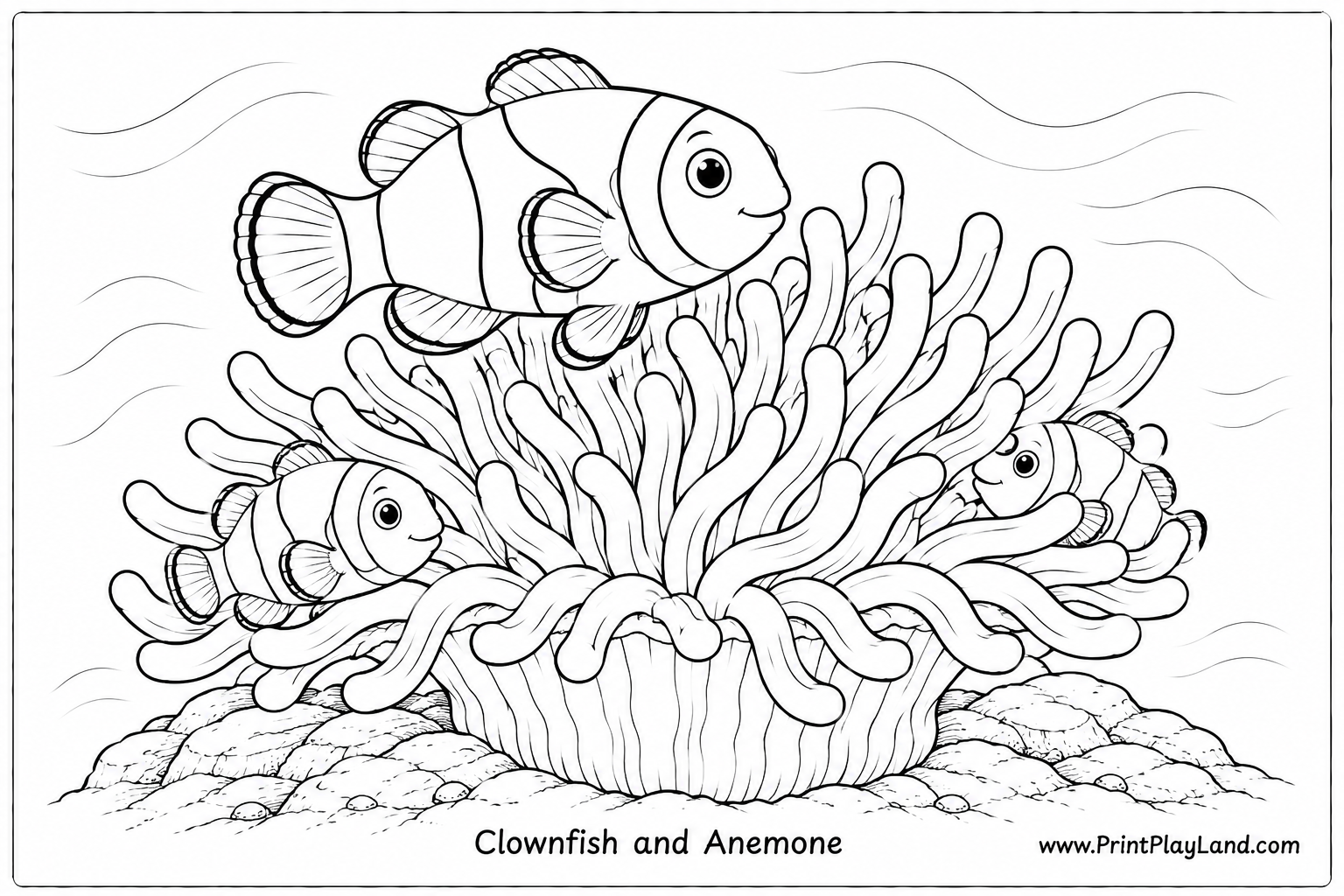
Clownfish are well known for living closely with certain sea anemones. The fish can move among the anemone's tentacles in a relationship that helps both animals.
Look at the clownfish coloring page and notice how the fish swim above, beside and among the broad anemone tentacles.
Eight Arms of an Octopus
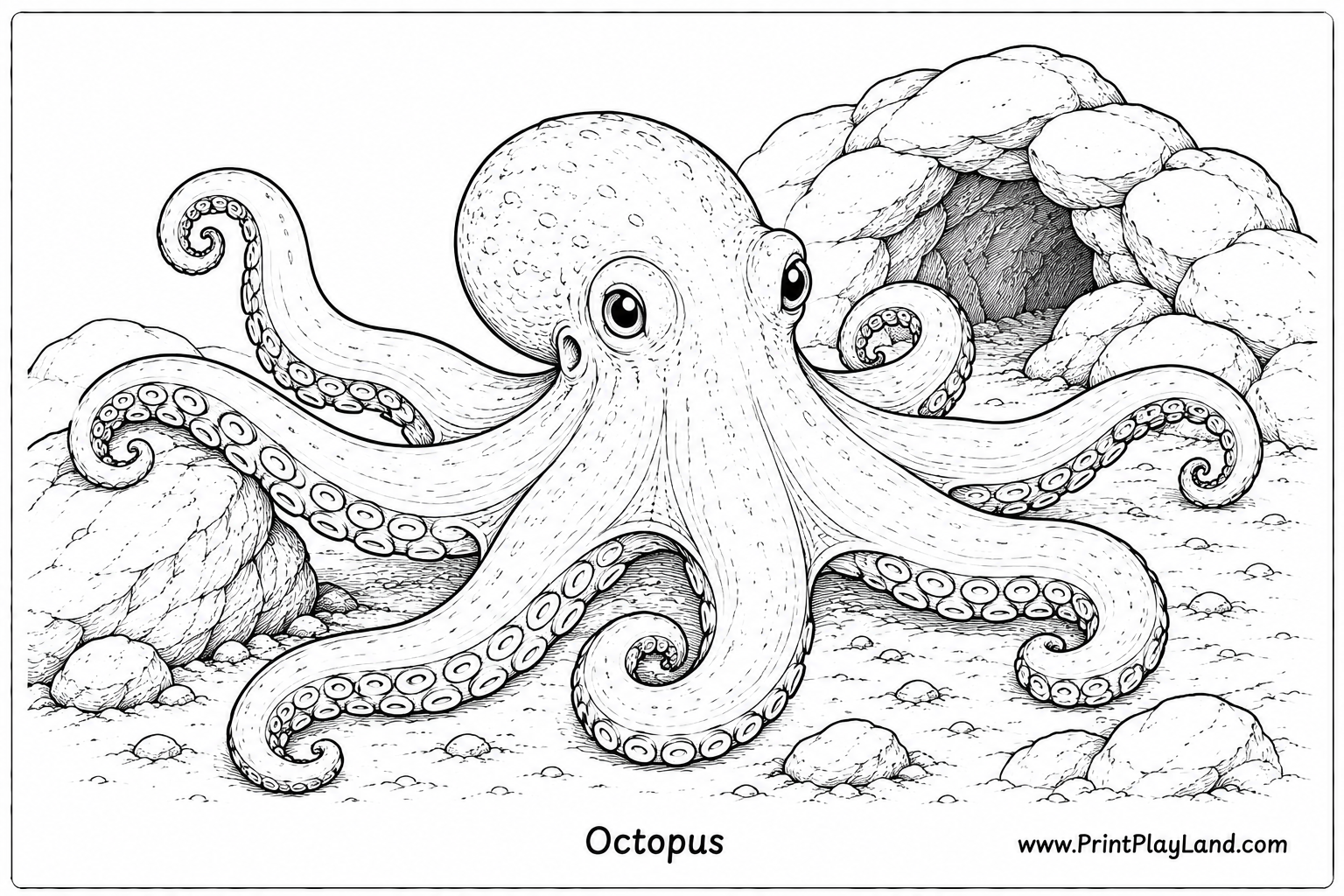
An octopus has eight flexible arms. The arms can bend and curl in many directions, creating interesting shapes and spaces for coloring.
Octopuses can move around rocky ocean habitats and use spaces in reefs and rocks for shelter. In our reef friends scene, a smaller octopus peeks from beneath a reef ledge.
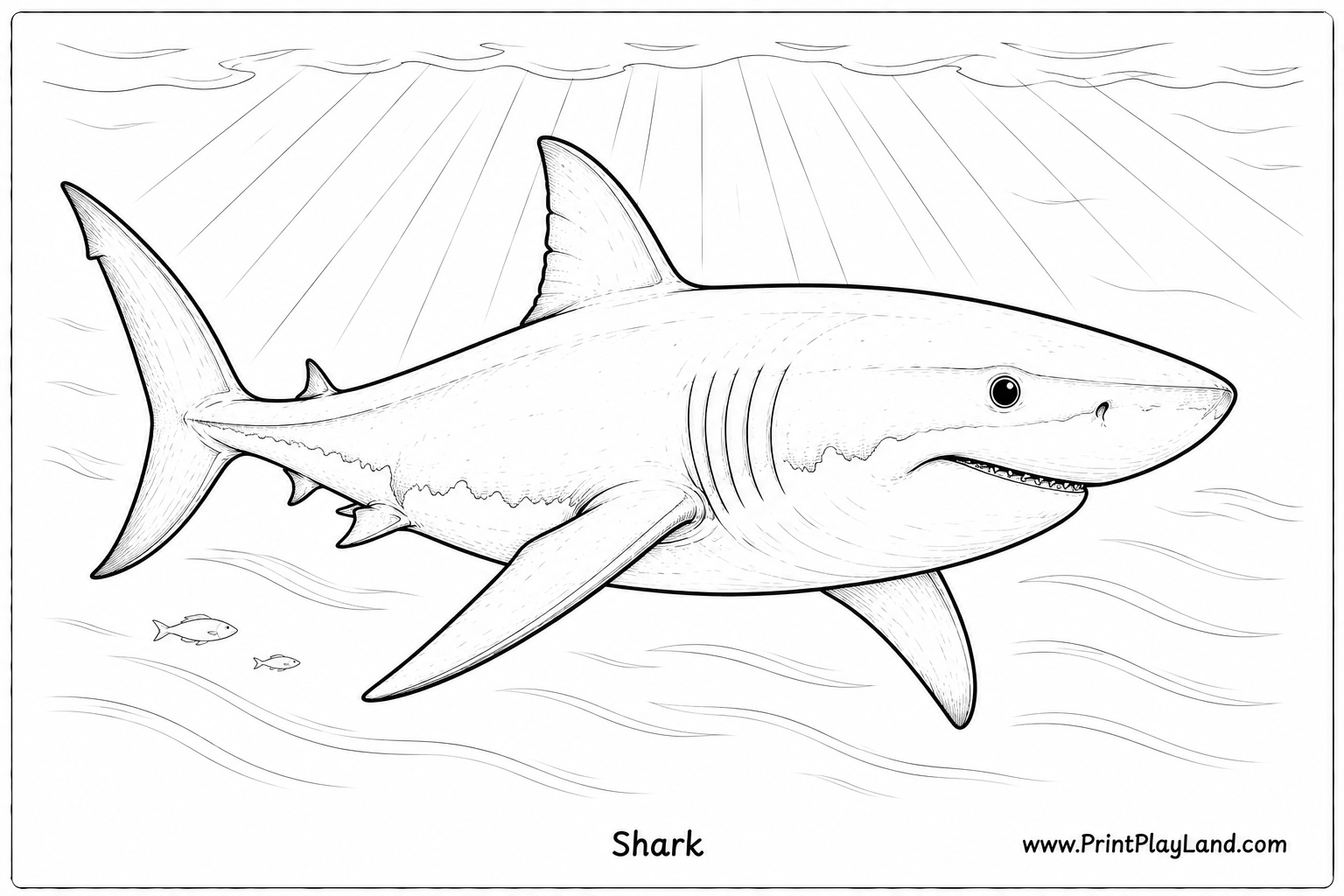
Sharks Come in Different Shapes
Many sharks have streamlined bodies that help them move through water. Their fins and strong tails are easy features to notice in a coloring sketch.
Hammerhead sharks are especially distinctive because of their wide, hammer-shaped heads. Their eyes are positioned near the outer ends of the head.
Drifting Jellyfish
Jellyfish do not swim through the ocean like sharks or dolphins. Their bell contracts to help move water, and ocean currents can also carry them along.
Their umbrella-shaped bells, broad oral arms and trailing tentacles create flowing lines that can be fun to fill with imaginative colors.
Gliding Like Underwater Wings
Manta rays have enormous pectoral fins that spread outward like broad underwater wings. They move these fins to glide through the ocean.
Their wide, flattened bodies look very different from the narrow shape of a shark or the rounded bell of a jellyfish.
A Tiny World in a Tide Pool
When ocean water remains among coastal rocks as the tide moves out, it can form a tide pool. These shallow pools can become small habitats for sea life.
Starfish, also called sea stars, can live in rocky coastal habitats. Sea anemones and other animals may also be found in tide-pool environments.
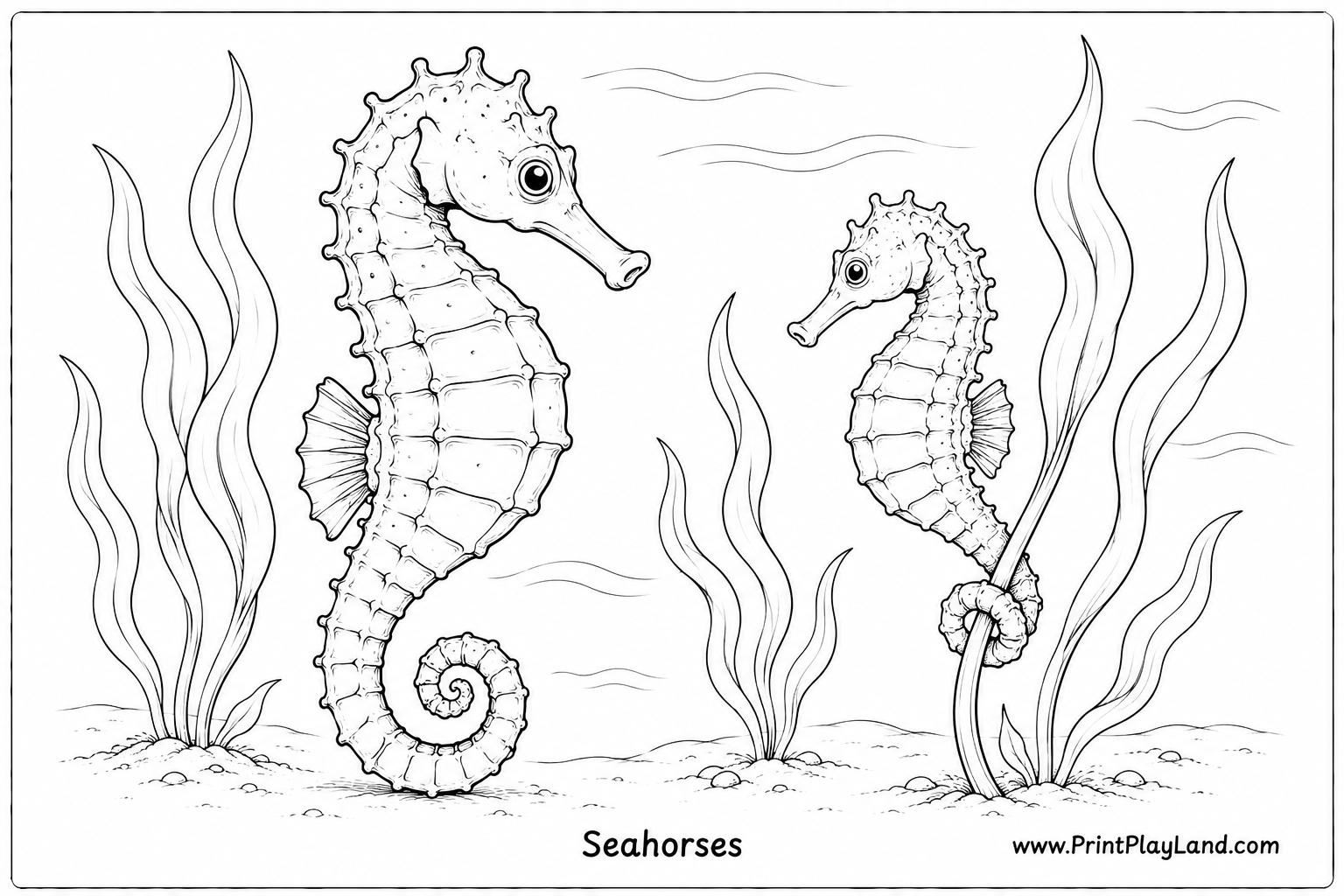
Look at a Seahorse
Seahorses have a very unusual body shape. Their long snouts and curled tails make them easy to recognize.
Unlike most fish, seahorses swim in an upright position. Their distinctive ridged body shape creates many small details to notice while coloring.
Color Your Own Ocean
You can use colors inspired by real ocean animals or create a completely imaginary underwater world. Try a rainbow manta ray, a purple shark or a glowing green jellyfish.
Look at the waves, currents, reef shapes and ocean animals in each picture, then turn the scene into your own colorful ocean adventure.
🌈 Explore More Coloring
Finished your ocean adventure? Discover another colorful world waiting to be explored.
Transportation Coloring
Explore cars, trains, airplanes, ships, bicycles and exciting ways to travel with free printable transportation coloring pages for kids.
ExploreFruits Coloring
Explore apples, bananas, mangoes, berries, tropical fruits and more with free printable fruit coloring pages for kids.
ExploreSpace Coloring
Explore rockets, planets, astronauts, friendly aliens and imaginative space adventures with printable coloring pages for kids.
Explore