
Bug Coloring Pages
Butterflies, ladybugs, bees and other little creatures are ready for color. Explore gardens, ponds and tiny bug worlds filled with playful details.

🐞 Pick a Bug Picture to Color
Choose butterflies, ladybugs, bees, a funny spider or another little creature and fill its tiny world with your favorite colors.
🔍 Look Closely at Little Creatures
Wings, legs, antennae and shells can look very different. Look closely at each little creature while you color.
🦋 Wings and Flying
Butterflies, dragonflies, bees and fireflies use wings to move through gardens, around ponds and across open spaces.
🐜 Six-Legged Insects
Insects have six legs. Ants, beetles, grasshoppers and praying mantises are all insects with three pairs of legs.
🕷️ Eight-Legged Spiders
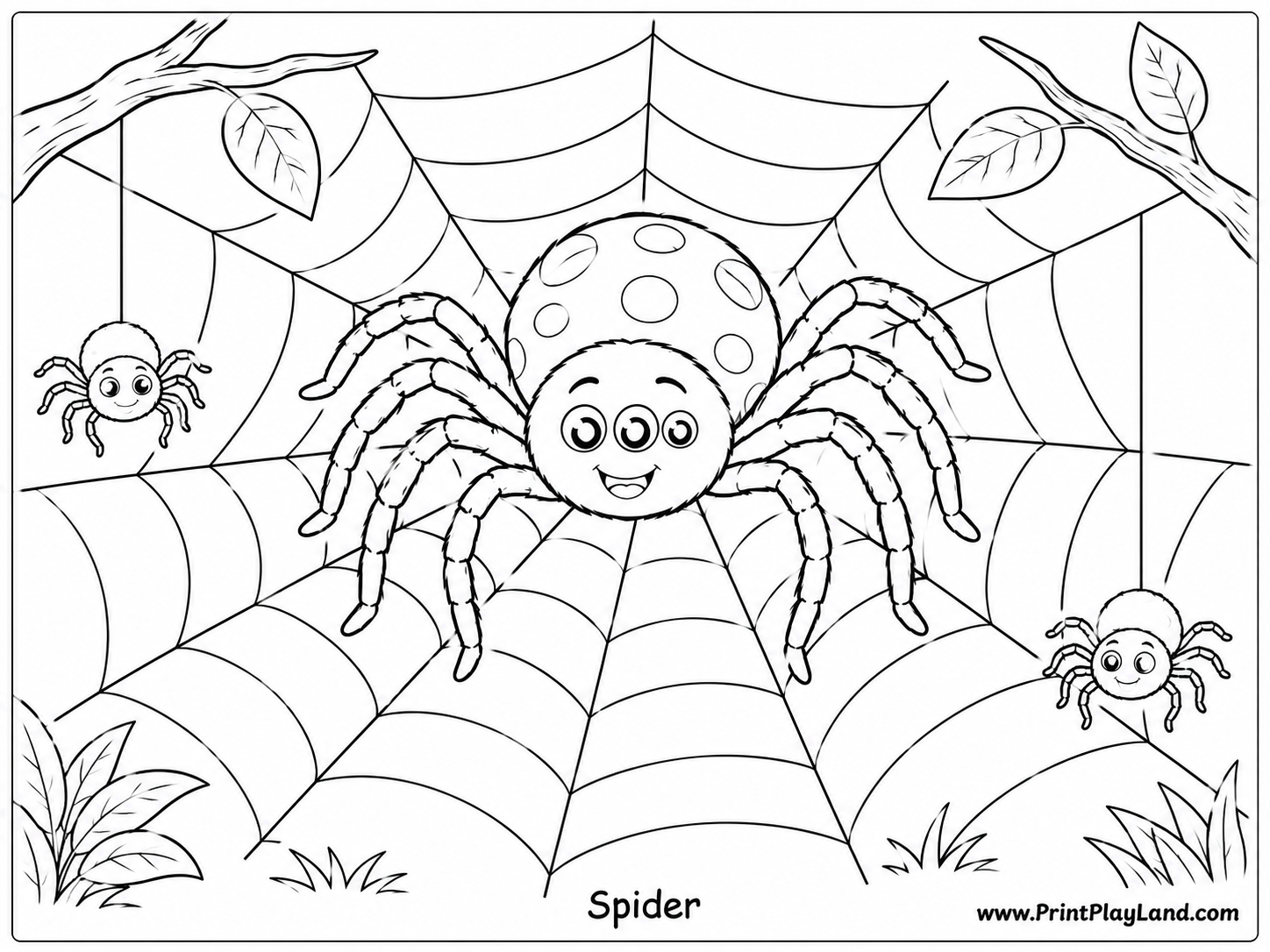
Spiders have eight legs and are not insects. Many spiders make silk, and some use silk to build webs.
🐌 Shells and Soft Bodies
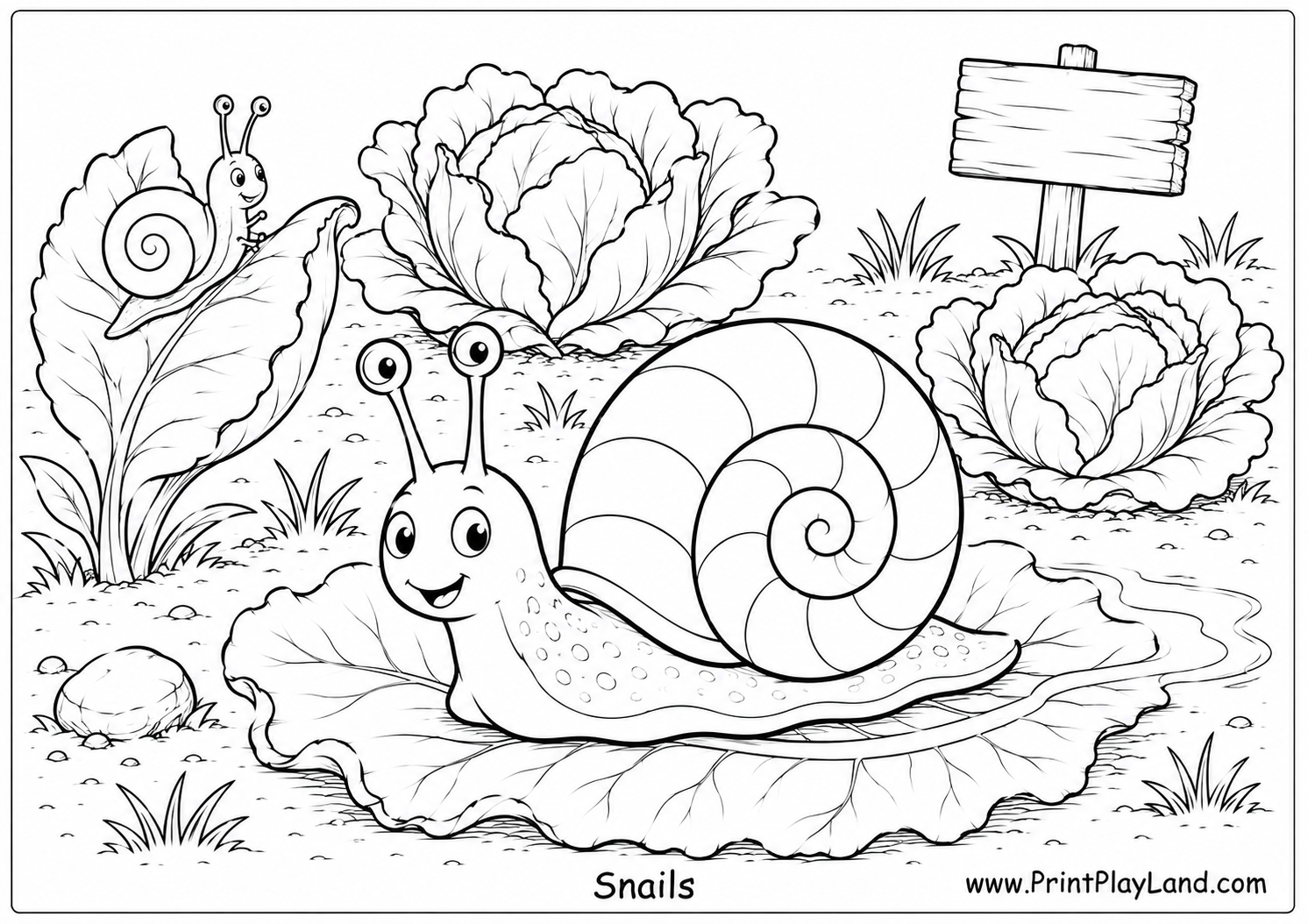
Snails have soft bodies and carry shells. Their spiral shell shapes are easy to recognize and fun to color.
🌿 Gardens and Leaves
Caterpillars crawl across leaves, bees visit flowers and mantises can wait among plant stems and garden foliage.
💧 Little Creatures by a Pond
Dragonflies often fly near water. Pond plants, reeds and flowers create places where many small creatures can be seen.
🐞 Discover a Tiny Bug World
Small creatures can have amazing wings, unusual legs, patterned bodies and surprising ways of moving.
Are They All Insects?
We use the word bugs here as a friendly everyday name for small crawling and flying creatures. But not every creature in this coloring collection is scientifically an insect.
Butterflies, ants, beetles, bees and grasshoppers are insects. Insects have six legs and three main body sections. Spiders are arachnids and have eight legs, while snails are mollusks with soft bodies.
Butterfly Wings
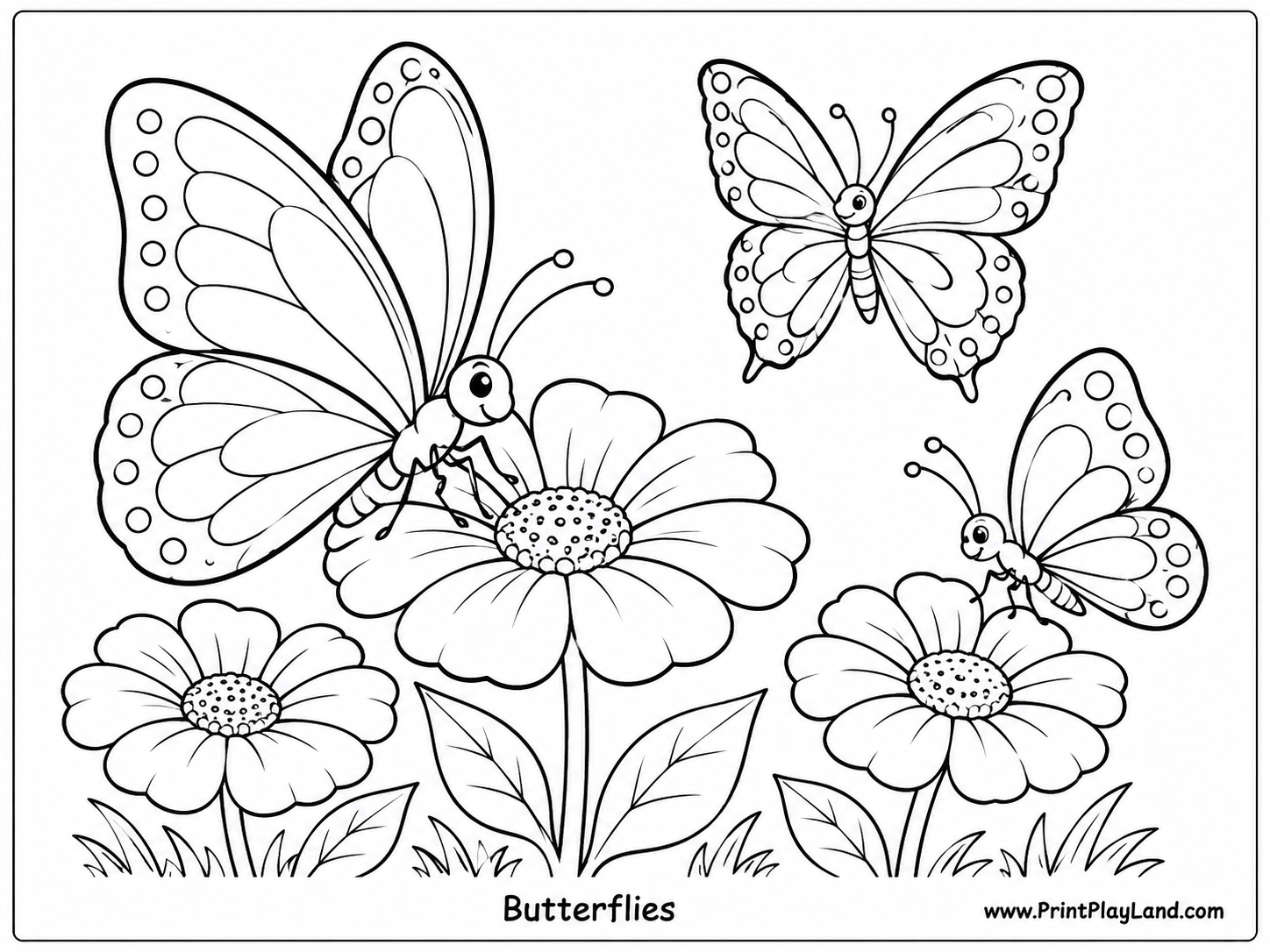
Butterflies have two pairs of wings. Their wings can show spots, bands and many other patterns.
In the butterfly coloring page, the butterflies have broad wing sections that can be filled with matching colors or completely different patterns.
Ladybugs Have Wing Covers
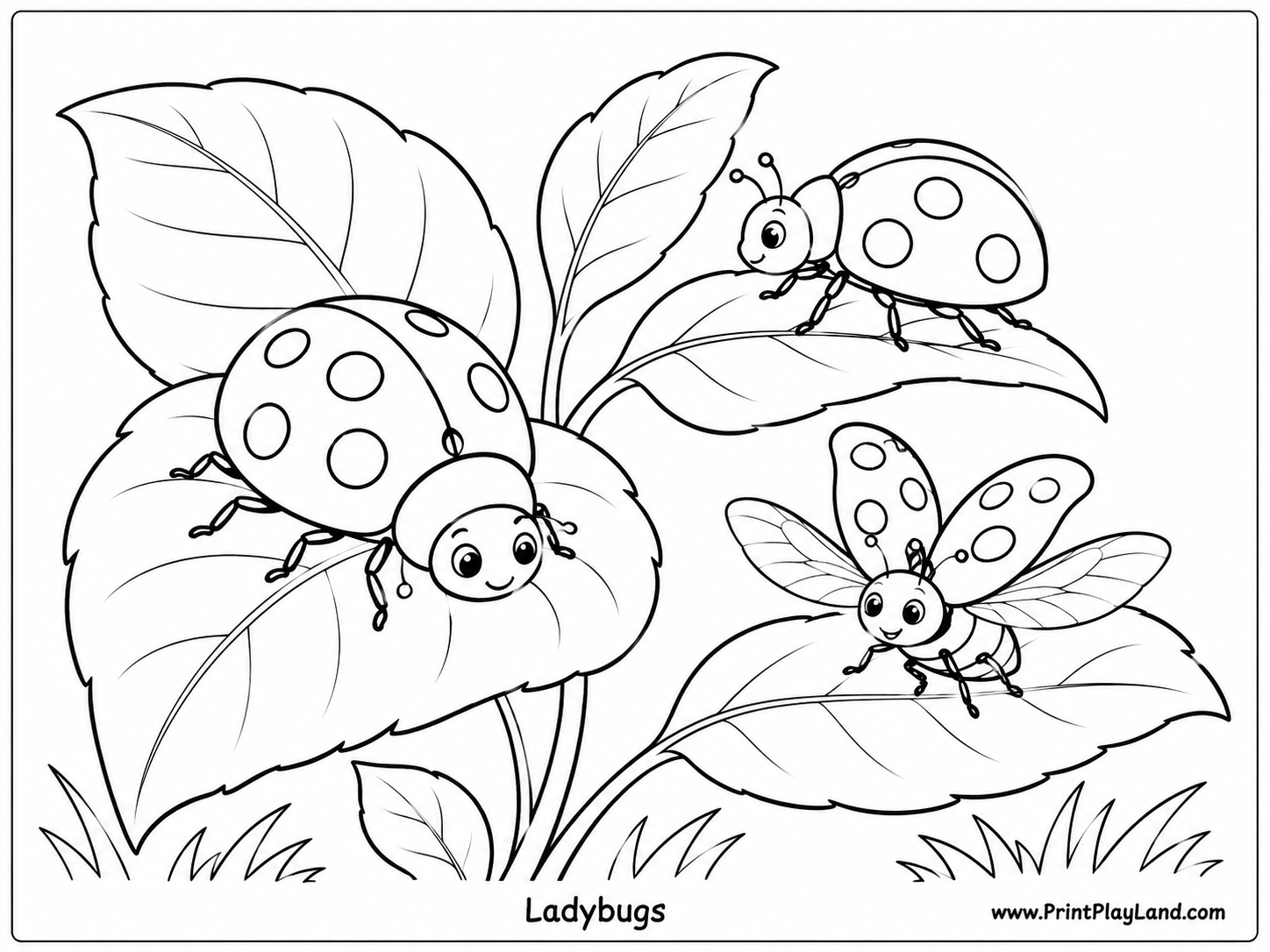
A ladybug's familiar spotted back is formed by hard outer wing covers. The flight wings are folded underneath when the ladybug is not flying.
One ladybug in our coloring page is taking off, so its outer wing covers are raised and the flight wings beneath them can be seen.
Four Wings of a Dragonfly
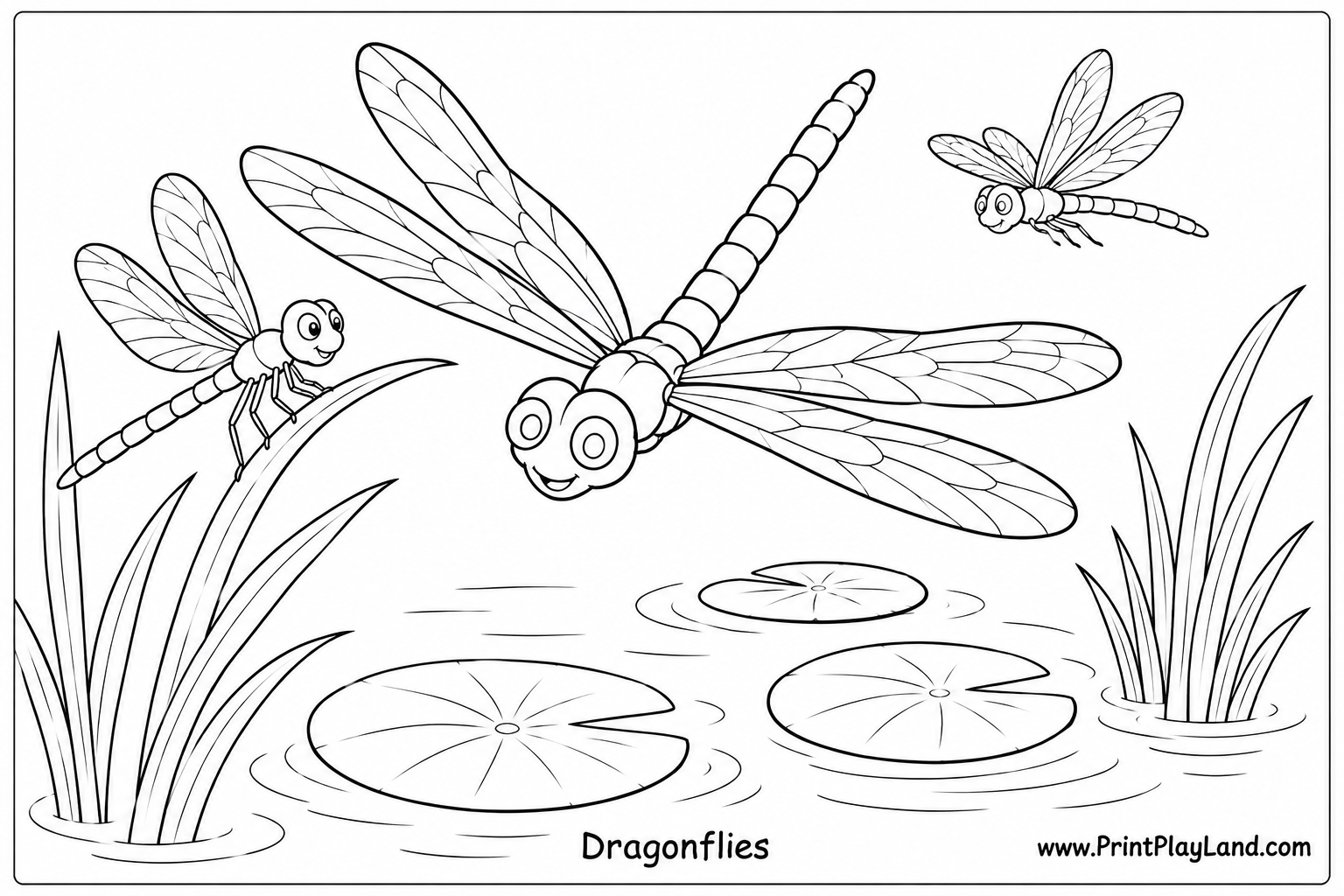
Dragonflies have four wings and long, segmented bodies. Their broad wings can move independently in ways that help dragonflies fly with great control.
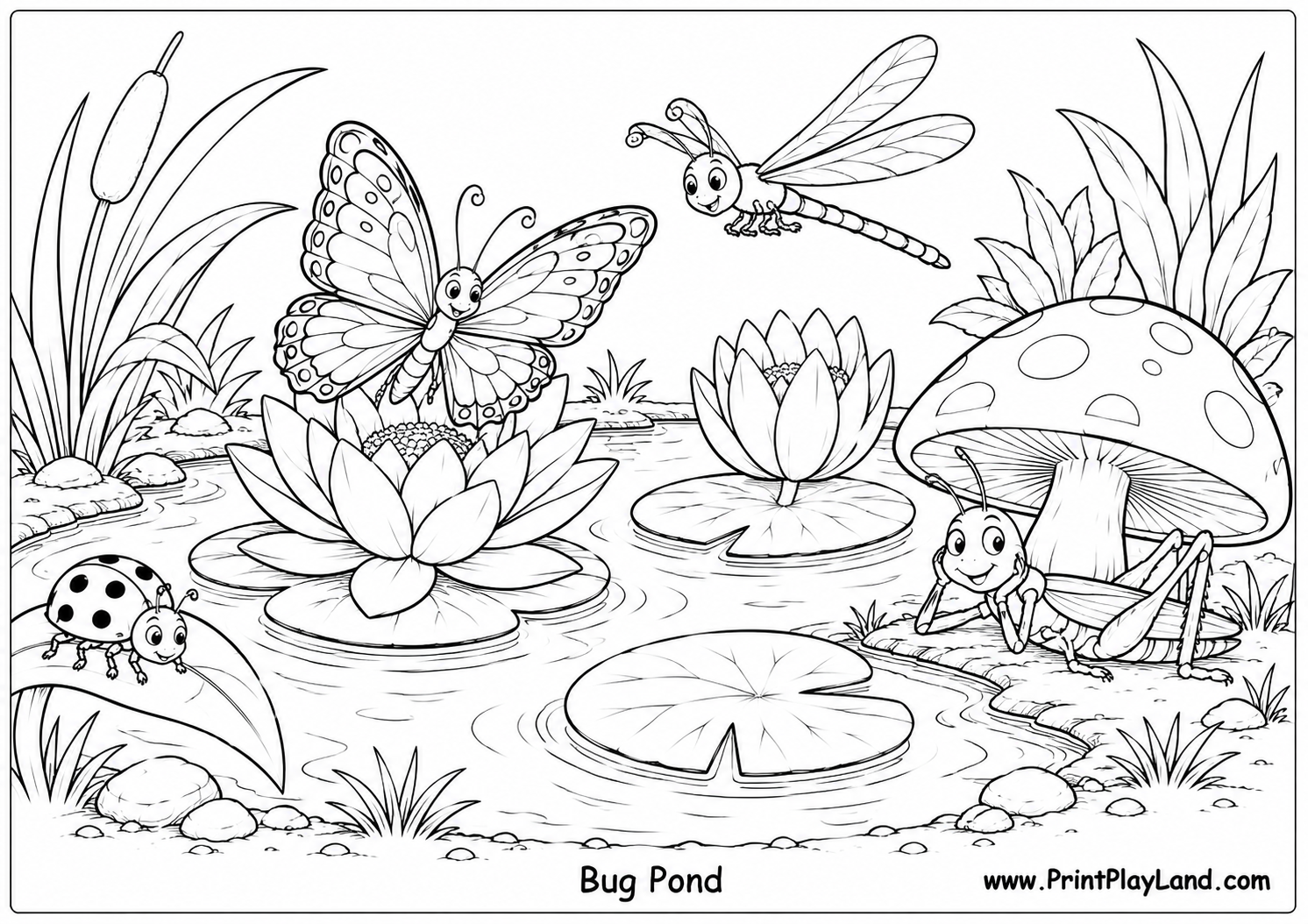
Dragonflies are often seen around ponds and other freshwater habitats. Reeds, lily pads and water make a natural setting for the dragonfly coloring page.
Caterpillars and Butterflies
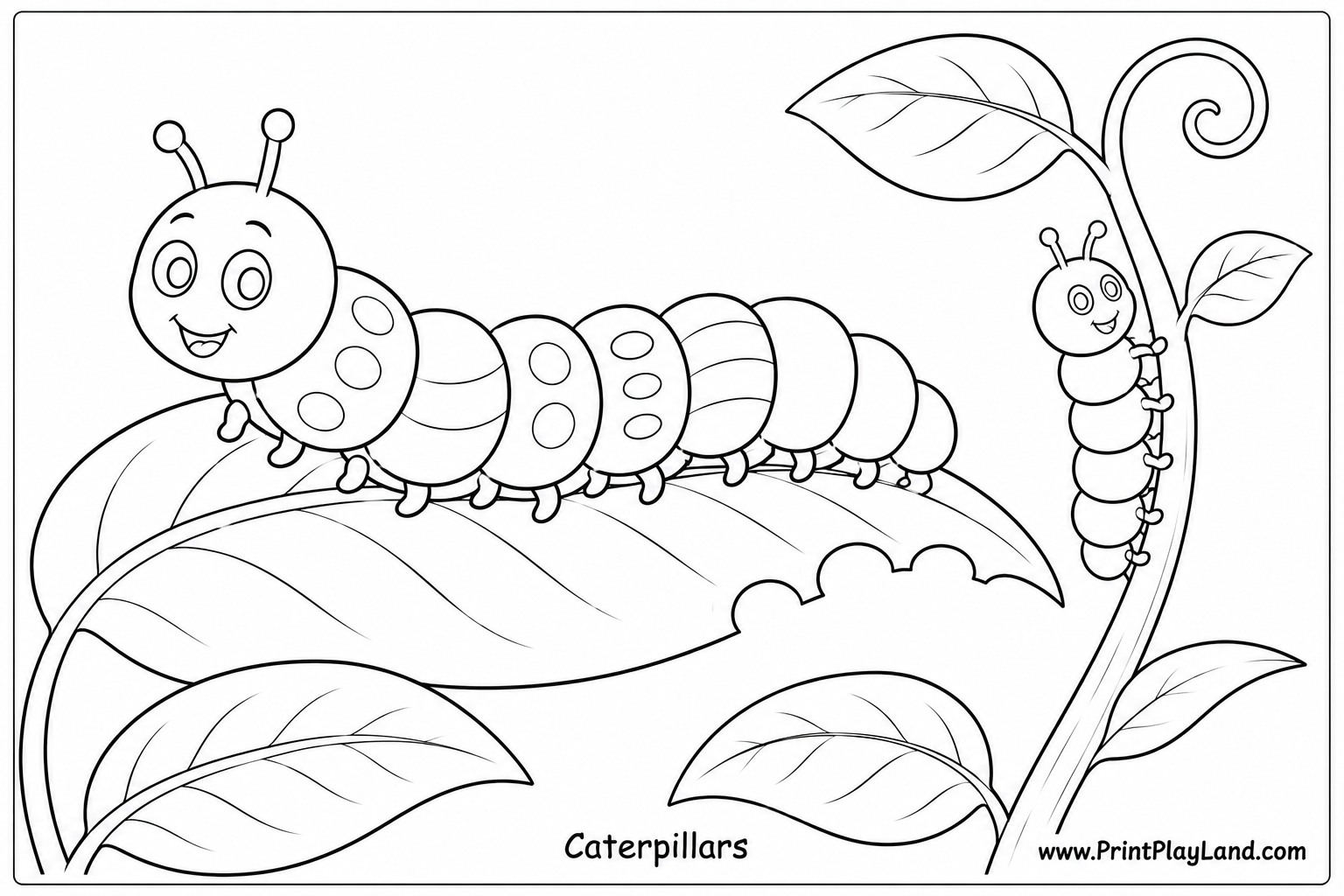
A caterpillar is the larval stage of a butterfly or moth. It grows and changes before becoming an adult with wings.
Caterpillar bodies are made of repeated segments. Their rounded sections create a very different coloring shape from the wide wings of a butterfly.
Ants Living Together
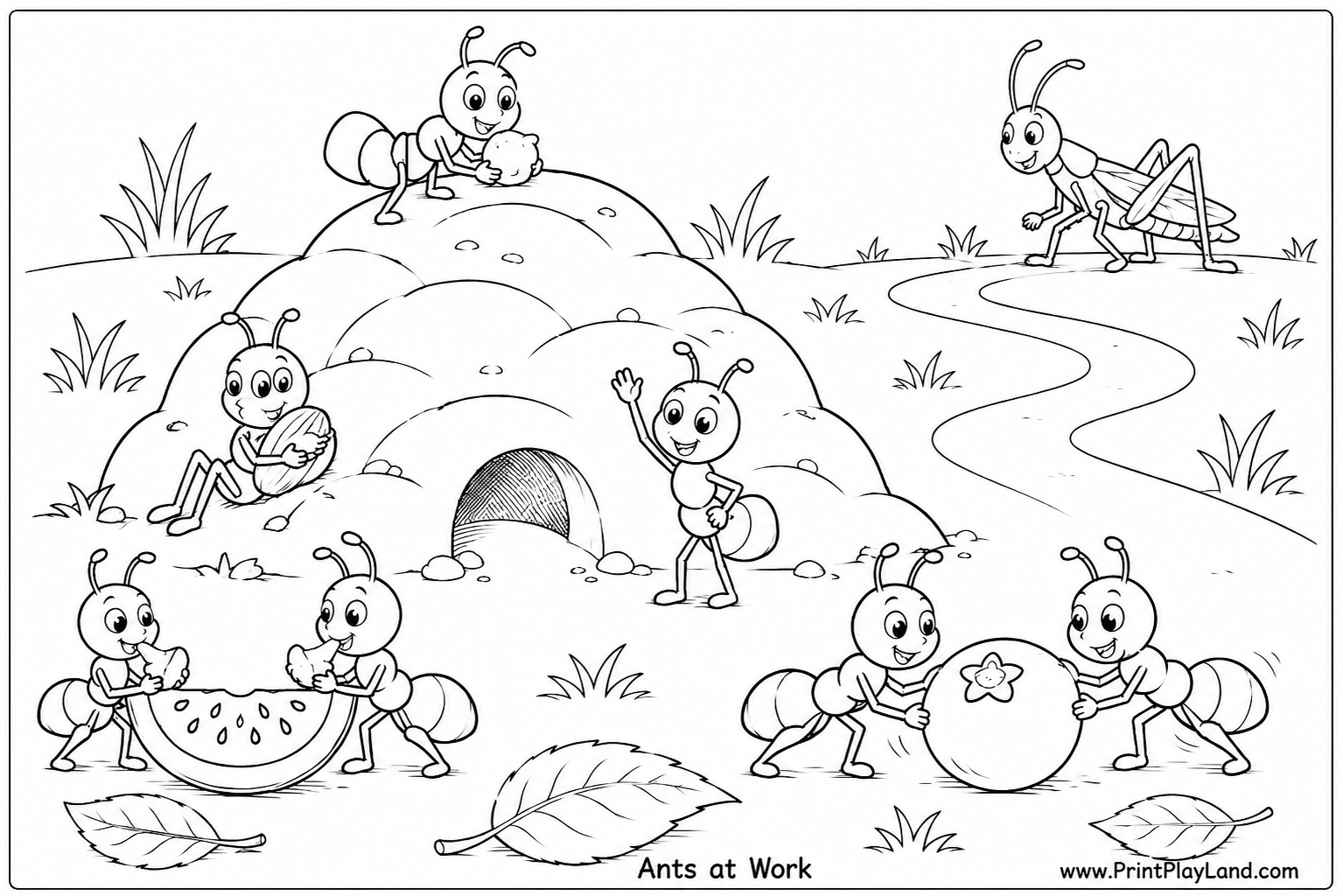
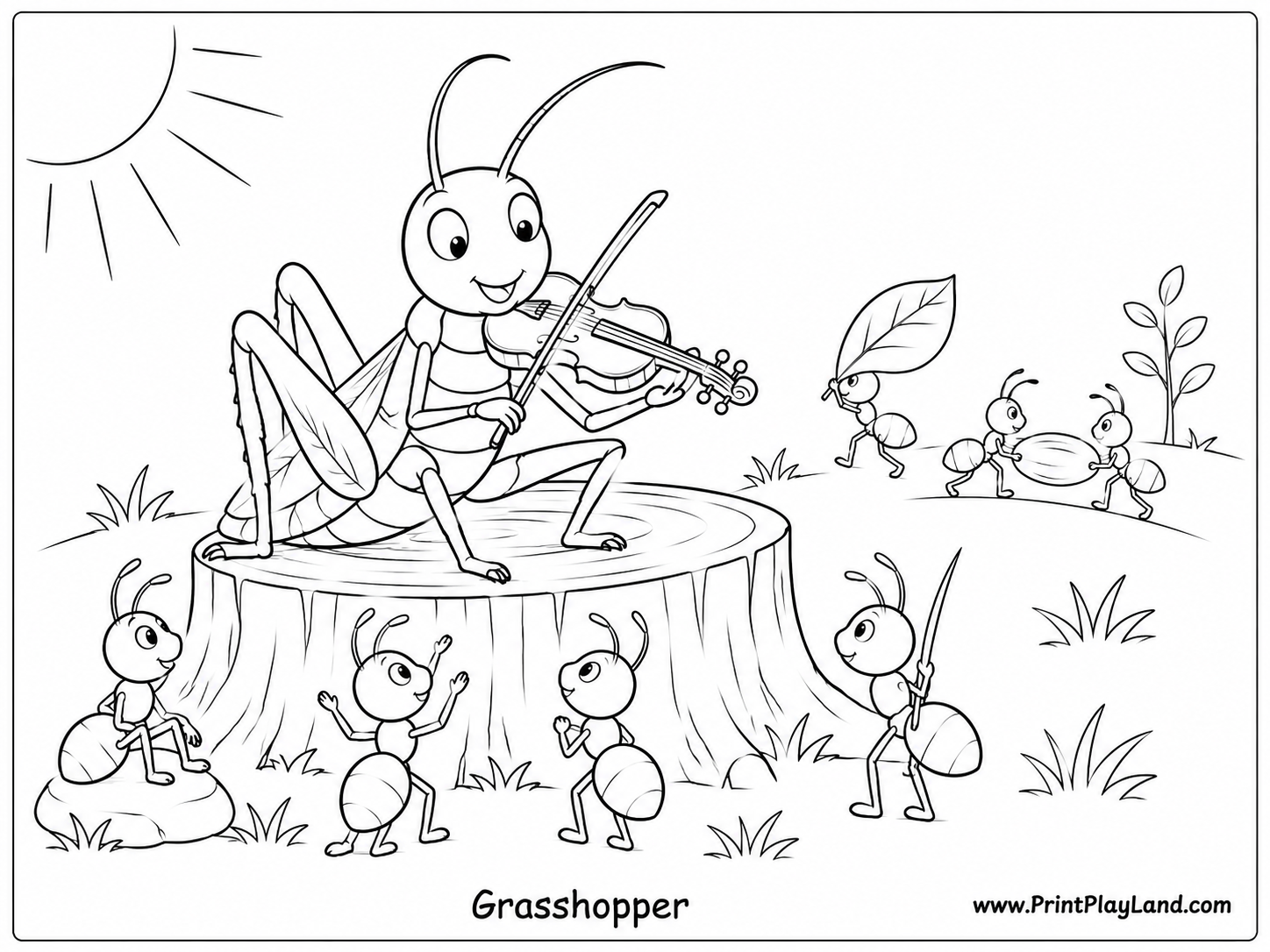
Ants are social insects that live in colonies. Different ants can work together to find food, care for the colony and maintain their nest.
Our grasshopper and ant pictures also create a small coloring story. In one picture, ants listen while a cheerful grasshopper plays music. In another, the ants enjoy their stored food while the grasshopper approaches the anthill.
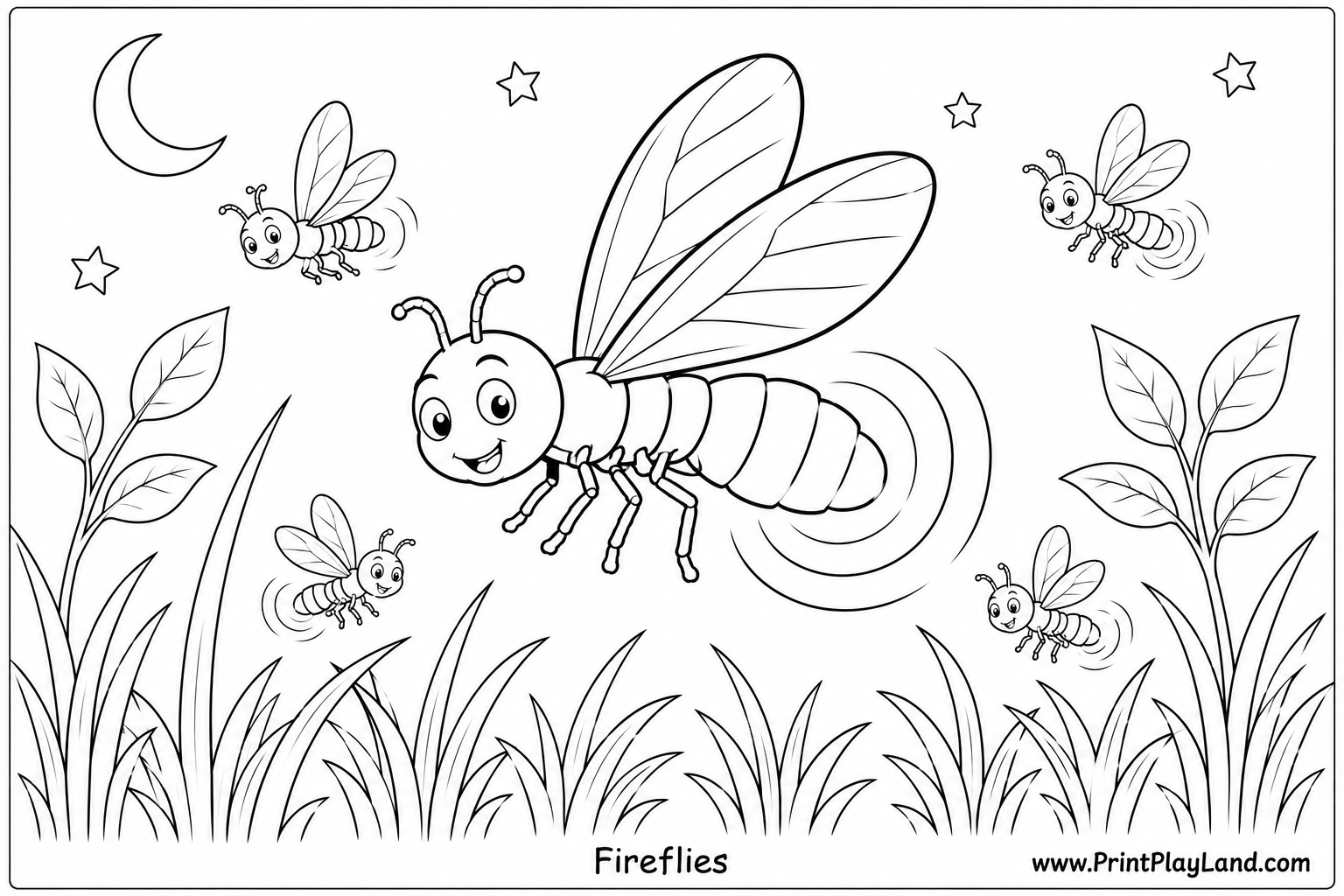
Fireflies That Make Light
Fireflies are beetles. Many fireflies can produce light in special organs near the end of their abdomen.
This natural light is called bioluminescence. In the firefly coloring page, the outlined glow sections leave room to invent bright evening colors.
Beetles and Hard Wing Covers
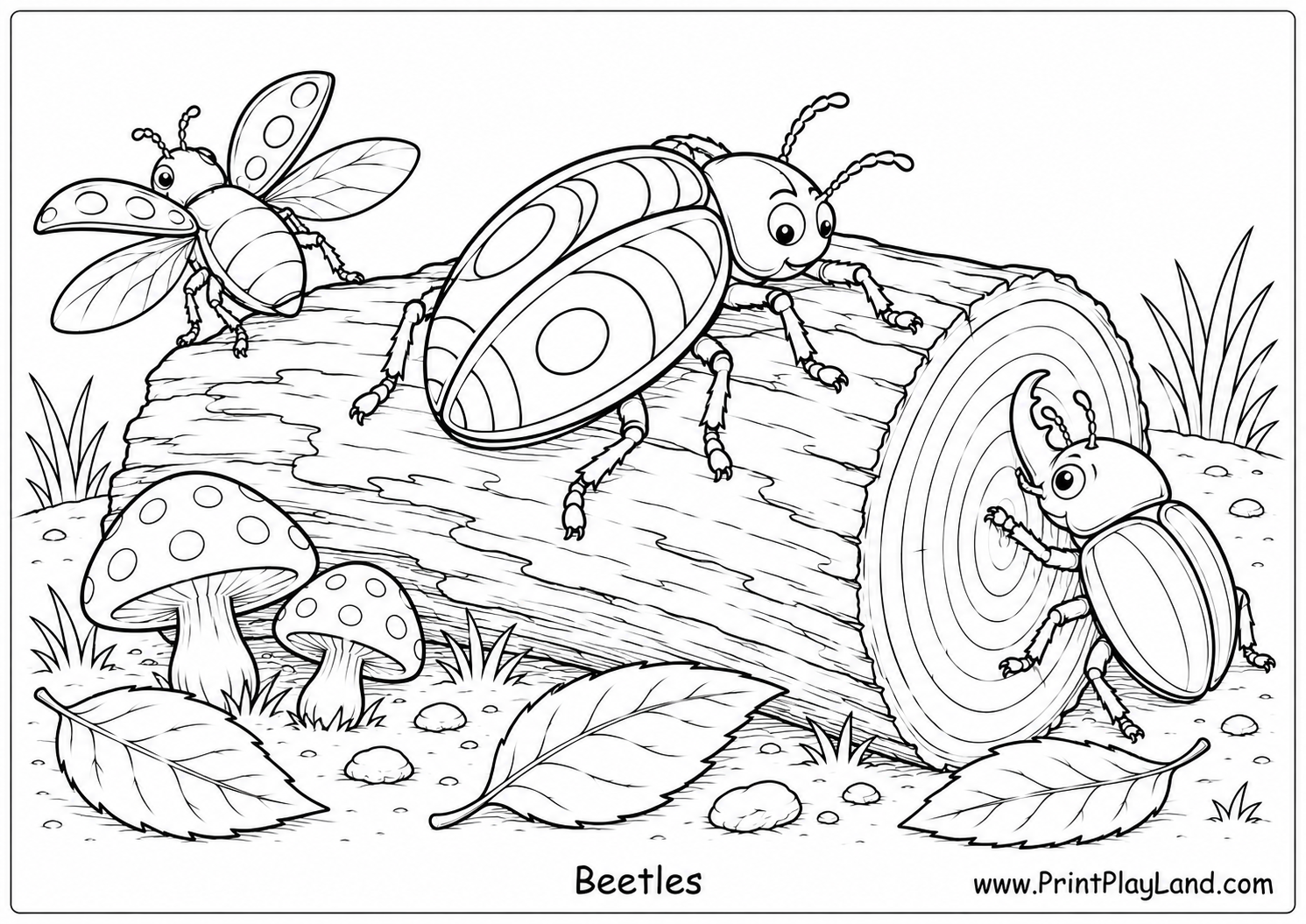
Beetles have hard outer wing covers called elytra. These covers protect the more delicate flight wings beneath.
Beetles can have many different body shapes. Some even have large horn-like structures, creating bold outlines and unusual coloring spaces.
A Praying Mantis Uses Its Front Legs
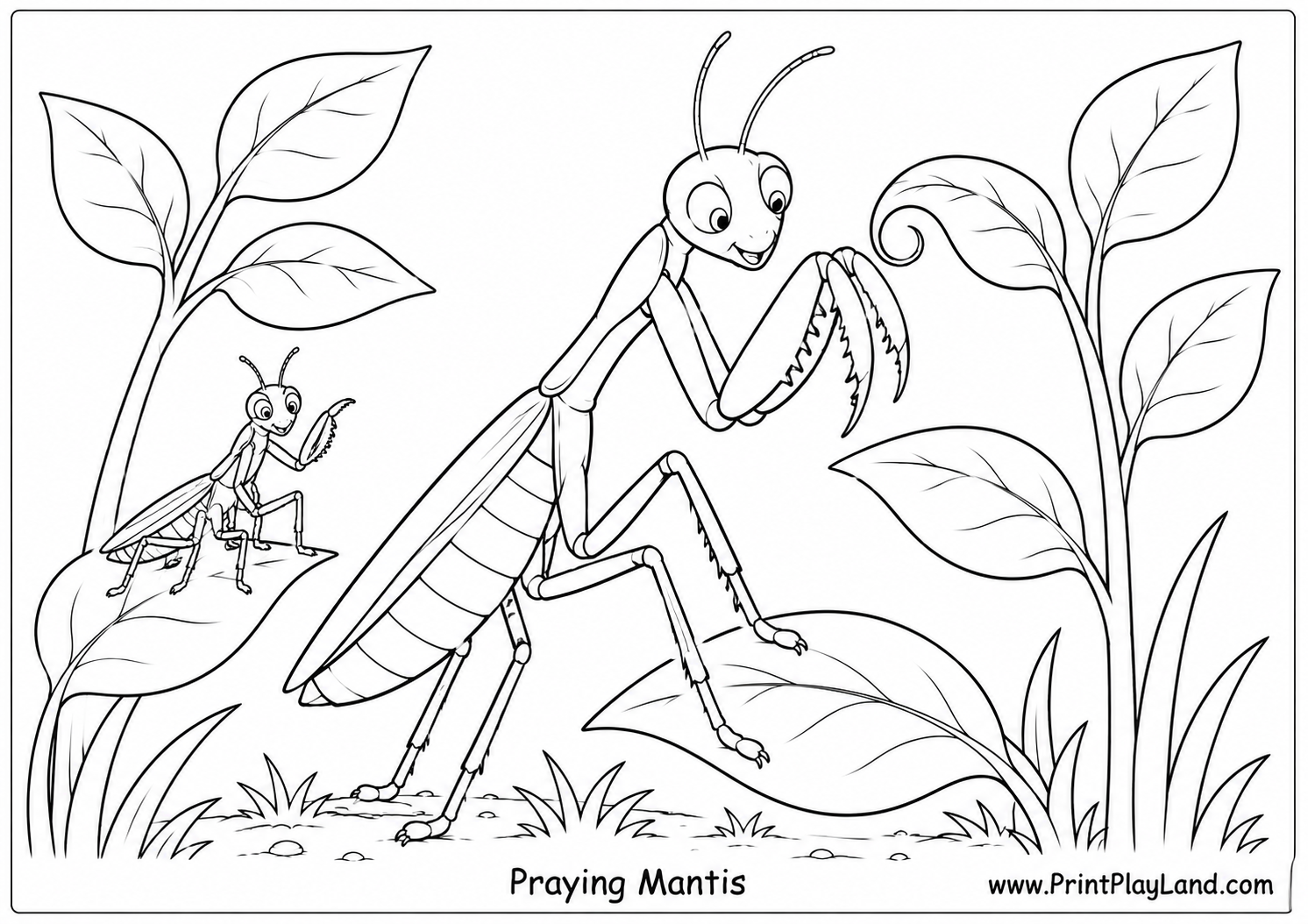
A praying mantis has long front legs adapted for grasping. When these legs are folded, they create the familiar pose that helped give the mantis its name.
Mantises also have triangular heads, long bodies and noticeable antennae. Their unusual shape makes them easy to recognize among garden plants.
Bees Visit Flowers
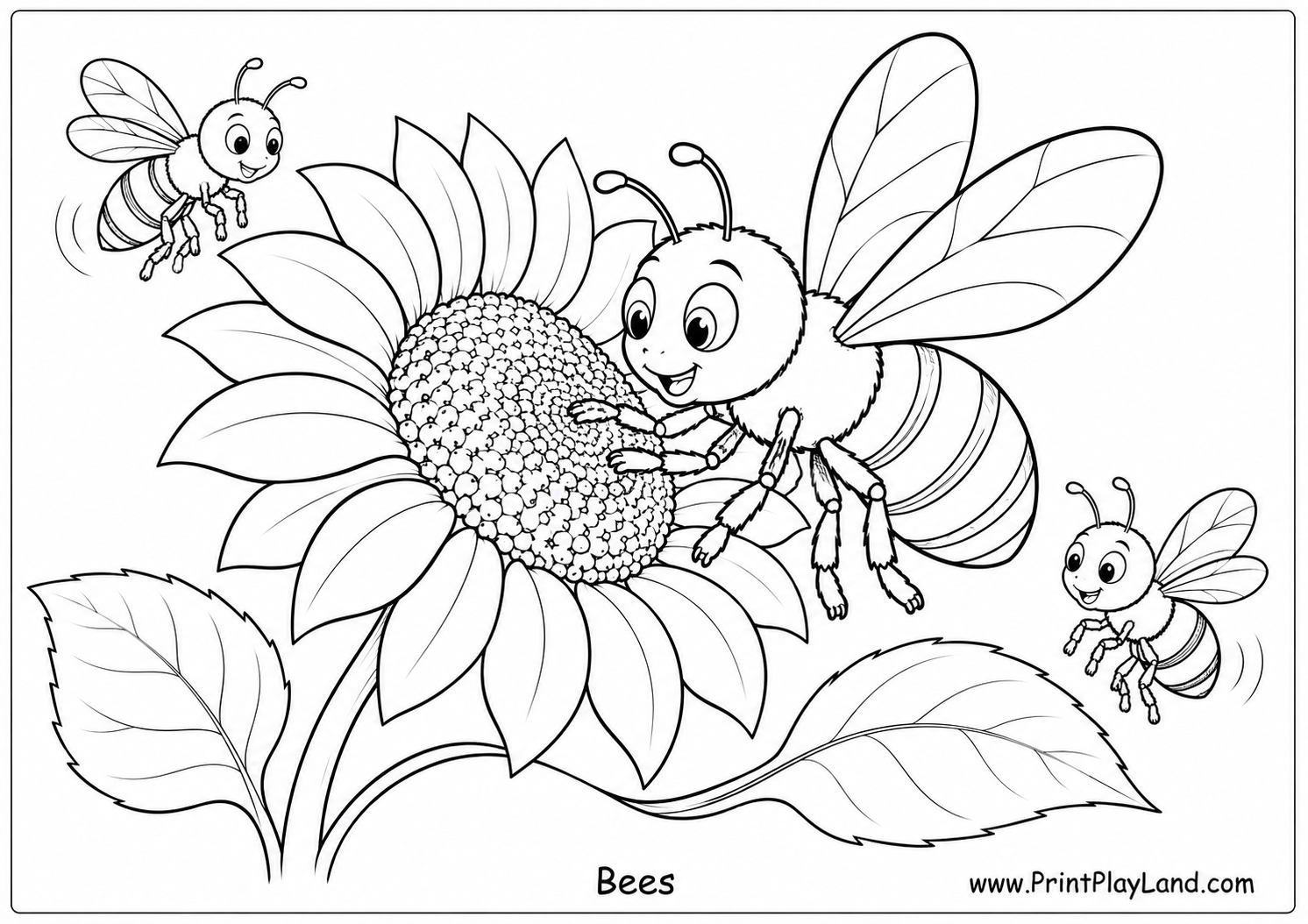
Bees visit flowers to collect nectar and pollen. As bees move between flowers, they can also carry pollen from one flower to another.
The sunflower in our bee coloring page gives the bees a large flower center to explore while the broad petals and leaves create extra coloring spaces.
Spiders and Silk
Spiders can produce silk. Different spiders use silk in different ways, including making webs, wrapping eggs and creating safety lines.
The broad web in our spider coloring page uses widely spaced lines so the funny spiders and the web both remain easy to see and color.
A Snail Carries Its Shell
A snail has a soft body and a shell. The shell grows with the snail and often forms an easy-to-recognize spiral shape.
Snails move slowly using a muscular foot. In our garden scene, one snail crawls across a fallen cabbage leaf while another explores a leafy plant.
Little Habitats Full of Life
The Bug Pond and Bug Garden coloring pages bring several small creatures into one habitat. Around a pond, you might see dragonflies, butterflies and other visitors near plants and water.
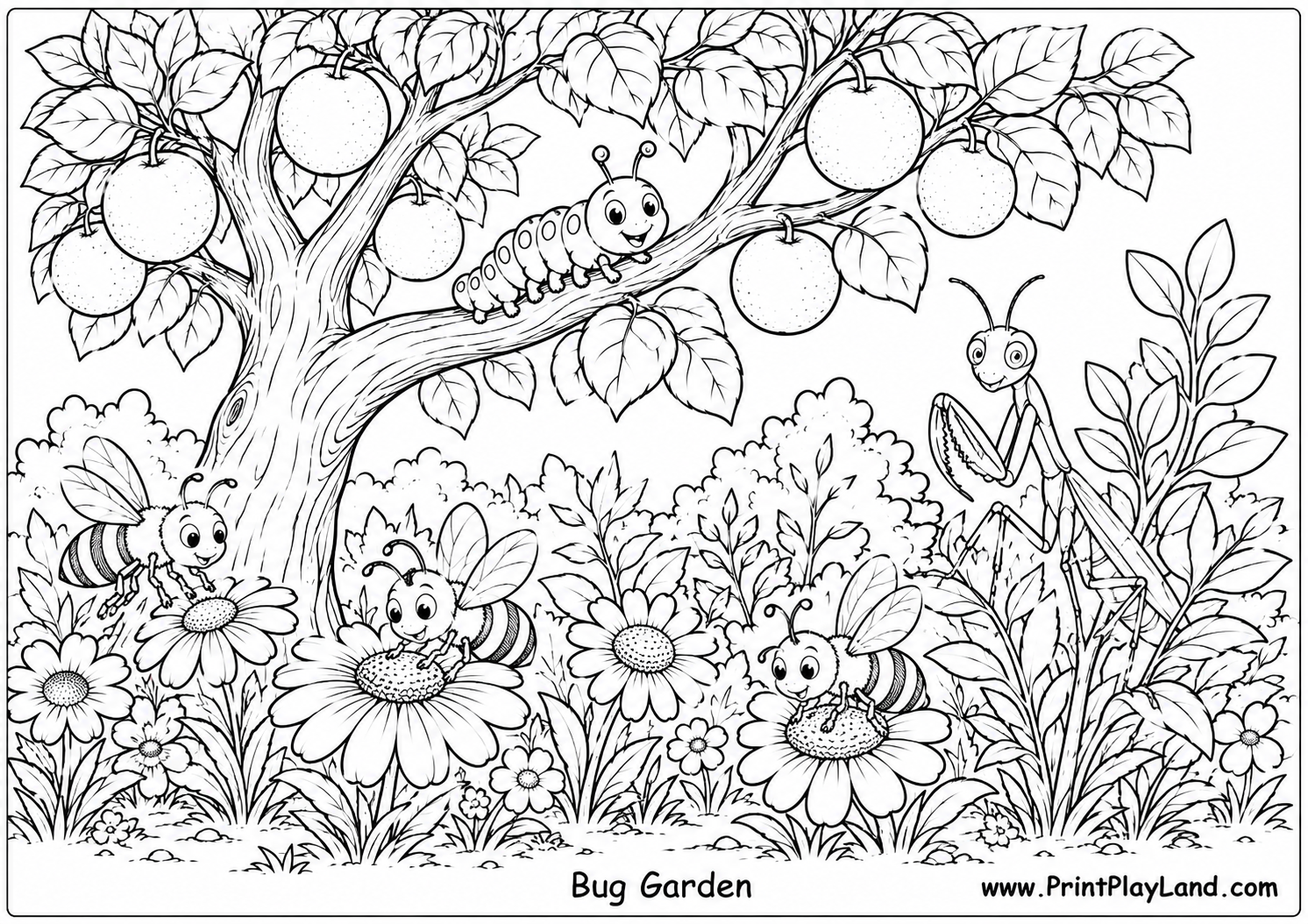
A garden with a fruit tree, flowers and shrubs can also provide places for caterpillars, bees and praying mantises. Look closely at each scene and see how many little creatures you can find.
Color Your Own Tiny World
Use colors inspired by real insects and garden creatures or invent your own. Try a rainbow ladybug, a golden spider or a dragonfly with bright patterned wings.
Look at the wings, legs, antennae, shells, leaves and webs, then turn every picture into your own colorful tiny world.
🌈 Explore More Coloring
Finished exploring the tiny bug world? Discover another colorful adventure waiting to be explored.
Ocean World Coloring
Explore sea turtles, dolphins, whales, sharks, reef fish and more with free printable ocean world coloring pages for kids.
ExploreUnicorn Coloring
Discover magical unicorns, rainbow adventures and playful fantasy worlds ready to color.
ExploreFruits Coloring
Explore apples, bananas, mangoes, berries, tropical fruits and more with free printable fruit coloring pages for kids.
Explore